Pension NI and Tax Basics
By Priya Sharma · Updated 13 June 2026

Landing your first graduate job is a monumental achievement. You have aced the interviews, secured the offer, and you are ready to start your career. Then, at the end of your first month, you open your payslip and notice something shocking. The number hitting your bank account is significantly lower than your annual salary divided by twelve.
Your payslip now has a stack of deductions you have never dealt with before. While university prepares you for your chosen field, it rarely prepares you for the intricacies of HM Revenue & Customs (HMRC), tax codes, and pension contributions.
Don’t panic. This guide breaks down exactly where your money goes, why it is necessary, and how to ensure you are not paying too much.
Job-hunting after your degree?
Get our free Graduate Job Pack: the grad-scheme calendar by sector, a one-page CV that actually gets read, what to negotiate in an offer, and what Plan 5 repayments take from your first payslip. Twelve pages, checked for 2026/27.
One email a week, unsubscribe whenever. Every signup goes into our draw for the Beats Studio Pro (£349, UK, 18+). Terms.
1. Income tax: the big one
Income tax is the primary tax you pay on your earnings. However, you do not pay tax on every single penny you earn. Everyone in the UK has a Personal Allowance. This is the amount of income you can earn each year without paying any tax at all.

For the vast majority of graduates, the standard Personal Allowance is £12,570 (always check the official Gov.uk rates as these can change in the budget).
How tax bands work
The UK uses a “progressive” tax system. This means you only pay the higher rates on the portion of your salary that falls into that specific band, not on your whole salary. This is a common misconception.
| Band | Taxable Income | Tax Rate |
|---|---|---|
| Personal Allowance | Up to £12,570 | 0% |
| Basic Rate | £12,571 to £50,270 | 20% |
| Higher Rate | £50,271 to £125,140 | 40% |
| Additional Rate | Over £125,140 | 45% |
Note: Rates may differ slightly if you live in Scotland.
Understanding your tax code
You will see a code on your payslip, such as 1257L. This tells your employer how much tax-free income you are entitled to.
The number, 1257, is your Personal Allowance (£12,570) with the final digit dropped. The letter L just means you are entitled to the standard tax-free allowance with no special circumstances. So 1257L is the code most graduates will see.
If you see a weird code like “BR” or “0T” on your first payslip, you might be on an emergency tax code. This often happens if HMRC doesn’t have your details yet. Don’t worry, this usually resolves itself, and you will be refunded any overpayment automatically in a future paycheck.
2. National insurance (NI)
National Insurance is separate from Income Tax. It builds up your entitlement to certain state benefits, most notably the State Pension and the NHS.

Unlike Income Tax, NI is calculated on a pay-period basis (weekly or monthly) rather than annually. This means if you have a massive bonus one month, you might pay more NI that month, which isn’t refundable later even if your annual earning is lower.
You generally start paying National Insurance once you earn above a certain threshold (roughly £12,570 a year). The main rate for employees is 8% on earnings between the primary threshold and the upper earnings limit, and 2% on earnings above that.
3. Student loan repayments
Many graduates view this as a debt, but it behaves much more like a graduate tax. You only repay it if you are earning enough money.
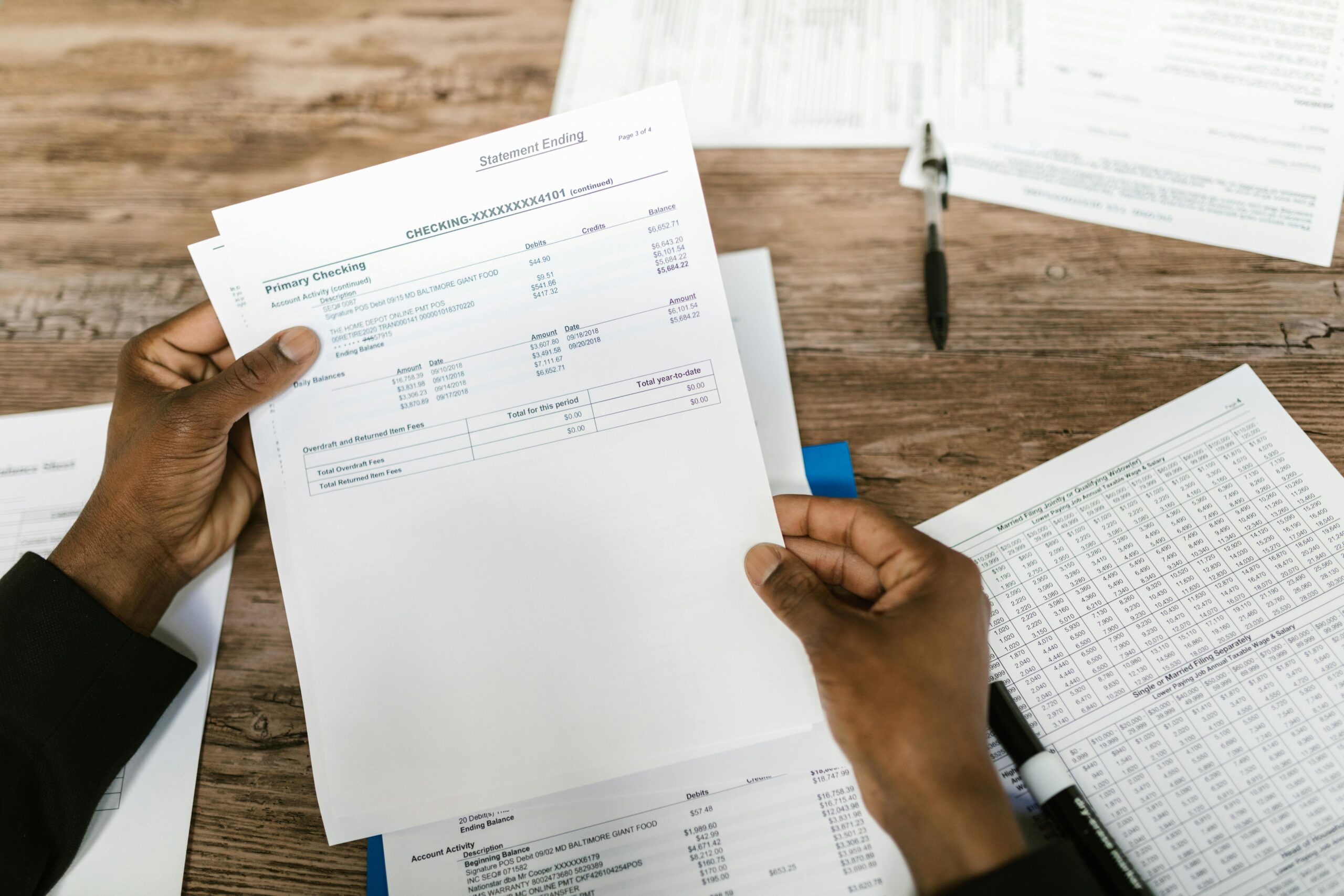
The repayment threshold depends on when you started your course and which plan you are on:
If you started your course before August 2023 you are on Plan 2, and you repay 9% of everything you earn above £29,385 (the 2026/27 threshold), with anything still outstanding written off 30 years after you became due to repay. If you started in or after August 2023 you are on Plan 5, where the threshold is lower at around £25,000 and the loan runs for 40 years instead.
This is deducted automatically from your payslip before the money hits your account. This does not affect your credit score, though mortgage lenders will take the monthly expenditure into account when calculating affordability.
4. The workplace pension: free money?
When you start a job, you will likely be “auto-enrolled” into a workplace pension scheme. It might be tempting to opt out so you can have more cash in your pocket today. However, we strongly advise you to think twice before doing so.

Why you should stay enrolled
The biggest reason is the employer contribution. By law, once you pay into a workplace pension your employer has to pay in too, usually a minimum of 3% of your qualifying earnings. Plenty of graduate schemes match more generously than that, so if you put in 5% they might match the full 5% or more. Opting out means turning down what is effectively a pay rise.
There is a tax advantage on top. Your contributions come out of your pay before tax (or get tax relief added afterwards), so a larger amount lands in your pension pot than it actually costs you in take-home pay.
Time is the part people underestimate. Money saved in your early twenties has decades to grow, so a pound paid in at 22 is worth far more at retirement than a pound paid in at 42. Starting small and early beats starting big and late.
5. Summary: the net pay calculation
Put it together and a £30,000 salary does not hand you £2,500 a month. The deductions come off in a rough order. Your pension is usually taken first, often before tax, which leaves your taxable pay. Income tax then comes off at 20% on the part above your monthly allowance, National Insurance is charged on your earnings for that period, and any student loan repayment takes 9% of what you earn above the threshold. What is left is your net pay, the number that actually reaches your account.
Knowing where each slice goes makes budgeting far easier, and it means that when you negotiate a salary for your next job you can work out what the rise is really worth once it reaches your pocket.
Useful resources
For the most accurate and up-to-date calculators, always refer to independent government sources:
Frequently asked questions
How much income tax will I pay on a graduate salary?
You pay 0 percent on the first 12,570 pounds (personal allowance), 20 percent up to 50,270 and 40 percent above. So on a 28,000 salary you pay around 3,086 pounds in income tax per year. The tax code 1257L applied to your payslip handles this automatically.
Should I opt out of my workplace pension?
Almost never. Auto-enrolment means your employer adds 3 percent on top of your 5 percent, plus 20 percent tax relief. Opting out throws away free money. The minimum 5 percent contribution costs you around 50 pounds of net pay per month on a 28,000 salary.
What is the National Insurance rate for new graduates?
Class 1 NI is 8 percent on earnings between 12,570 and 50,270 pounds and 2 percent above. On a 28,000 salary this is roughly 1,234 pounds per year. NI funds your state pension, NHS and benefits and shows on your payslip as NI.
Do I need to file a tax return in my first year of work?
Usually no. PAYE handles tax on your salary automatically. You only need to self-assess if you have side hustle income above 1,000 pounds, rental income, dividends above the allowance or you earn over 100,000 pounds. Register with HMRC by 5 October if any apply.
From your degree to your first payslip
Some weeks a big scheme quietly moves its deadline and half the people who wanted in hear too late. Some weeks it is the maths on what a £32k offer really leaves after tax and Plan 5. That is the Tuesday email. One tap and it is gone.
Every signup also enters our draw for the Beats Studio Pro (£349, UK, 18+). Terms.
Reviewed · Editorial standards

Ask Priya a question
If this guide didn't cover the thing you came for, ask. If enough people ask the same thing, it becomes a guide.