
Commuting and Travel Costs
By Marcus Reid · Updated 2 July 2026

Why graduate commuting costs matter
When you secure your first graduate role, the excitement of a new salary can quickly overshadow the practicalities of getting to the office, and during your studies, you likely lived within walking distance of your university campus or relied on cheap local student buses. The transition to a professional commute can be a severe financial shock. Commuting is often one of the largest monthly expenses for recent graduates. According to Bionic (2024) UK commuter costs research, British workers spend an average of around £4,811 a year on commuting (£19.10 a day over 252 working days), rising to roughly £7,132 a year for London commuters. If you are earning an entry-level salary, this takes a massive bite out of your take-home pay.
For students still finishing their degree, travel expenses are already a major source of financial stress. According to NUS (2024), 1 in 3 students have skipped a meal due to the cost of travel. This reality does not magically disappear once you graduate. Whether you are taking the train into central London, driving to a business park in the Midlands, or catching the bus across Edinburgh, understanding and managing these costs is essential for your financial health.

If you are applying for roles, you should factor the commute into your salary expectations. A job offering £28,000 a year with a £4,000 annual commute leaves you worse off than a £25,000 fully remote role. To help you figure out exactly how much you will have left over each month, use our Student Budget Calculator to map out your expected graduate income against your essential outgoings.
Budgeting for public transport and train travel

Public transport is the most common way for young professionals to commute, especially if you work in a major UK city. Fares do not always rise, though. For the first time in around 30 years, regulated rail fares in England were frozen at 0% from March 2026 and stay capped until at least March 2027 (gov.uk, March 2026); the government says they would otherwise have gone up by 5.8%, so this is a real saving for season-ticket holders. The freeze covers regulated fares such as standard season tickets, anytime tickets and off-peak returns between major cities. London is the main exception: TfL Tube and rail fares still rose by about 5.8% in March 2026 (funded separately by City Hall), although bus and tram fares there were held. If you rely on the train, you need a solid strategy to keep your costs manageable.
Train season tickets
Here are the main ways to pay for regular train travel:
- Daily tickets: Buying a ticket every single day is almost always the most expensive option. Only do this if you travel once a fortnight or less.
- Flexi season tickets: These give you 8 days of travel in a 28-day period. They are good for hybrid workers who go into the office twice a week.
- Monthly or annual season tickets: If you travel four or five days a week, an annual pass offers the steepest discount, giving you 12 weeks of free travel compared to buying daily tickets.
Never buy an annual season ticket on a credit card unless you can pay it off immediately. The interest charges will wipe out any savings you made on the ticket price. Instead, check if your employer offers an interest-free season ticket loan.
Worked Example: The Season Ticket Saving
Imagine you commute from Brighton to London three days a week.
- A daily return ticket costs £35. Travelling 3 days a week (12 days a month) costs £420 a month. Over 11 working months, that is £4,620.
- An annual season ticket for the same route might cost £4,100.
- By purchasing the annual ticket, you save £520 a year, even if you only travel three days a week.
If you are under 30, you should absolutely invest in a 16-25 or 26-30 Railcard. While you cannot use a Railcard to discount a season ticket, it will save you a third on daily off-peak fares and leisure travel. You can also link your Railcard to your Oyster card to get a third off off-peak pay-as-you-go Tube and bus travel in London. For more advice on managing your funds, check out our Graduate Money hub.
Managing bus and coach travel
Buses are generally much cheaper than trains, making them an excellent option for graduates living in urban areas. The UK government frequently introduces fare cap schemes. Limit the cost of a single bus journey in England. If your commute involves multiple bus operators, look into regional travel cards. These smartcards allow you to hop between different bus companies without paying multiple single fares, saving you a significant amount of money over a month.
The hidden costs of driving to work
If your graduate job is not accessible by public transport, driving might be your only option. While the upfront cost of fuel is obvious, driving comes with a host of hidden expenses that quietly drain your bank account.
According to the Office for National Statistics (2023), the average commute distance for a single occupancy car journey in the UK is 19.5 miles. Covering this distance every day adds up rapidly.
When budgeting for a driving commute, you must account for:
- Fuel: The most frequent expense, fluctuating based on global oil prices and your car’s fuel efficiency.
- Wear and tear: More miles mean more frequent tyre changes, oil top-ups, and brake replacements.
- Depreciation: The more miles you put on your car, the faster it loses its resale value.
- Insurance: Commuting requires a specific class of car insurance (Social, Domestic, and Commuting). This is more expensive than standard social use policies.
- Parking: If your workplace does not offer free parking, daily city centre parking charges can exceed £10 to £15 a day.
Worked Example: The True Cost of Driving
Let’s calculate the monthly cost of a 20-mile round-trip commute, five days a week. Roughly 400 miles a month.
- Fuel: Assuming your car gets 40 miles per gallon and fuel costs £1.45 per litre, you will spend about £65 a month on petrol.
- Parking: At £5 a day, that is £100 a month.
- Wear and tear/Depreciation: Estimated at 15p per mile, adding another £60 a month.
- Total monthly commute cost: £225 (excluding your fixed insurance and tax costs).
Before you accept a job that requires driving, use our Compare Bank Accounts tool to ensure you are getting the best cashback or rewards on your fuel and transport spending.
Comparing transport modes: what should you choose?
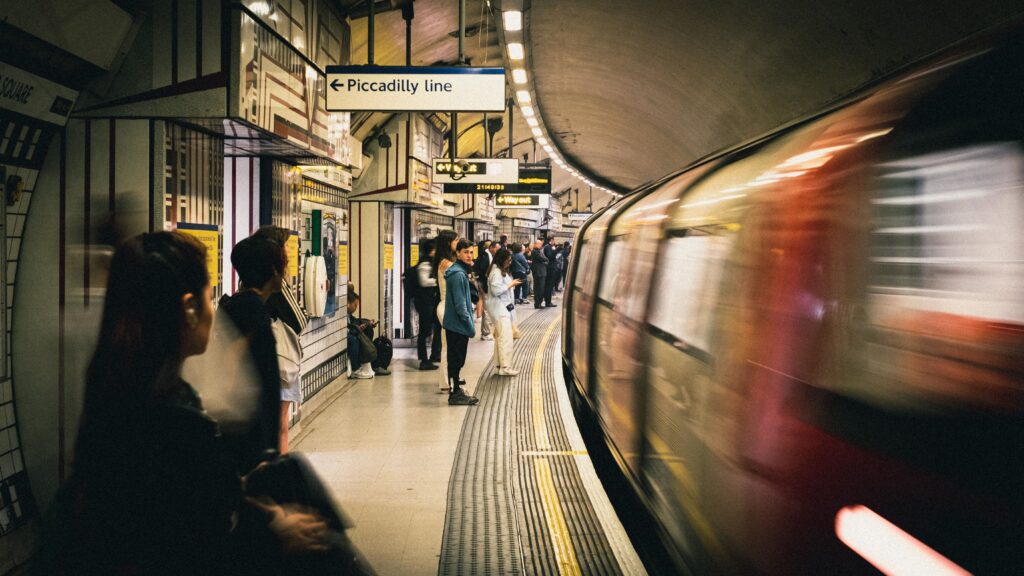
Choosing how to get to work depends heavily on your location, your budget, and your lifestyle. Below is a comparison of common commuting methods for UK graduates.
| Transport Mode | Average Monthly Cost | Pros | Cons |
|---|---|---|---|
| Walking / Cycling | £0 to £15 (maintenance) | Free, great for physical and mental health, environmentally friendly. | Only viable for short distances; weather dependent. |
| Bus | £60 to £90 | Cheaper than trains, extensive local networks, fare caps often available. | Slower journey times, vulnerable to traffic delays. |
| Train | £150 to £400+ | Fast for long distances, productive time (you can read or work). | Expensive, subject to strikes and delays, requires getting to the station. |
| Car | £150 to £300+ | Flexible departure times, direct route, comfortable personal space. | Hidden costs (parking, maintenance), stressful in heavy traffic. |
If you live close enough to cycle, ask your employer if they participate in the Cycle to Work scheme. This government initiative allows you to buy a bike and safety equipment tax-free through salary sacrifice, saving you up to 39% on the retail price.
Hybrid working vs. daily commuting
The rise of hybrid working has fundamentally changed how graduates approach their travel budgets. Working from home two or three days a week cuts your travel expenses significantly. It does introduce new costs that you need to monitor.
When you work from home, your transport costs drop, but your domestic bills rise. You will use more electricity to power your laptop and monitors, and you will likely have your heating on for longer during the winter months. If you are splitting bills with flatmates, you need to have an open conversation about how these extra costs are handled, especially if some flatmates work from home while others commute daily. Our Bills Splitter Tool is a brilliant way to keep your household finances fair and transparent.
How to reduce your travel expenses
You cannot always control where your office is located. You can take steps to minimise the financial impact of getting there.
- Carpool with colleagues: If you drive, ask around the office to see if anyone lives near you. Sharing the journey just two days a week instantly halves your fuel and parking costs.
- Claim student discounts: If you are a recent graduate, you might still have access to your university email address. Use it to renew your TOTUM card or keep your Student Beans and Unidays accounts active for as long as possible. Some local bus companies offer student rates that you can still claim.
- Travel off-peak: If your employer offers flexible working hours, ask if you can work from 10:00 AM to 6:00 PM instead of 9:00 AM to 5:00 PM. Train and bus fares are significantly cheaper after the morning rush hour.
- Relocate strategically: When searching for student housing options or your first graduate flat, do not just look at the rent. A cheaper flat that requires a £150 monthly bus pass might actually cost you more overall than a slightly pricier flat within walking distance of your office. Run the numbers through our Rent Affordability Calculator to see what you can truly afford.
- Check for employer subsidies: Many progressive companies now offer travel subsidies, free shuttle buses from major train stations, or improved cycle-to-work schemes to attract top graduate talent. You can research company benefits on Prospects careers to see what is standard in your industry.
If you are required to travel to different locations for your job, you should not be paying for this out of your own pocket. E.g., visiting clients or attending off-site meetings. Your employer should reimburse you for business mileage or provide a company travel card. Always clarify this during your induction.
Frequently asked questions
How much does the average UK commute cost per month?
The average monthly cost varies wildly depending on your location and transport method. Typical commuters spend between £100 and £300 a month. Those travelling by train into central London often pay significantly more, while those who cycle or take local buses pay much less. It is recommended to calculate your specific route before accepting a job offer.
Can I get a discount on my train commute if I am under 30?
Yes, you can buy a 16-25 or 26-30 Railcard, which gives you a third off most rail fares. However, you cannot apply this discount to season tickets. If you travel every day, a season ticket is usually cheaper. If you travel off-peak or only a few times a week, using daily tickets with a Railcard might save you more money.
Is it cheaper to work from home or commute to the office?
For most graduates, working from home is cheaper because the money saved on fuel, train tickets, and buying lunch out outweighs the increase in home energy bills. Still, if you live within walking distance of your office, going in might actually save you money on heating during the winter. You must calculate your specific travel costs against your estimated energy usage to know for sure.
Can I claim my travel costs to work back from the government?
Generally, no. Ordinary commuting costs between your home and your permanent workplace are not tax-deductible in the UK. The only exception is if you are travelling to a temporary workplace for less than 24 months, in which case you may be able to claim tax relief on those specific journeys.
Priya's email, for your first year out
Some weeks it's a rolling-deadline scheme that shuts when it's full, well before the date on its website. Other weeks it's whether a relocation bonus is worth the clause that makes you pay it back.
You'll also get the Graduate Job pack as a PDF. Unsubscribe any time.

Ask Marcus a question
If this guide didn't cover the thing you came for, ask. If enough people ask the same thing, it becomes a guide.
Read us often? You can add UniSorted as a preferred source on Google.