PAYE Tax NI Explained
By Marcus Reid · Updated 12 June 2026

The basics of PAYE tax and NI explained for graduates
Starting your first full-time job after university brings a lot of new responsibilities, and understanding your payslip is right at the top of the list. The amount deposited into your bank account each month is lower than your official annual salary divided by twelve, and the difference is Pay As You Earn (PAYE) tax and National Insurance (NI).
Employers use the PAYE system to deduct Income Tax and National Insurance directly from your wages before paying you, so you pay your taxes gradually through the year rather than facing one large bill in April. According to GOV.UK (2026), the current tax year runs from 6 April 2026 to 5 April 2027.
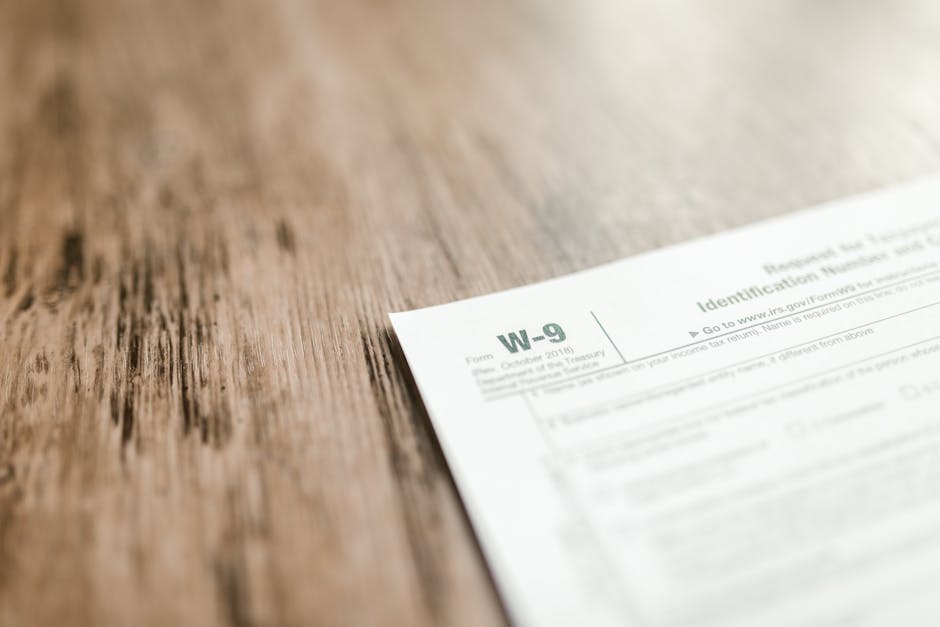
One exception worth knowing about: if you work as a freelancer or start your own business, you will not use PAYE. You register for Self Assessment instead and declare your earnings to HMRC each year. For the vast majority of graduates entering traditional employment, though, PAYE removes that admin entirely. Your employer calculates what you owe from your tax code, sends it to the government on your behalf, and the money that lands in your account is yours to spend or save.
If you are earning around this average graduate salary, you will be paying both Income Tax and National Insurance, and the deductions are big enough to matter for budgeting. If you are planning to move out of student accommodation and into a professional flatshare, base the budget on your net income, not your gross salary. Our student budget calculator works out monthly living costs from your actual take-home pay.
How the UK personal allowance impacts your PAYE tax

Before you pay a single penny in Income Tax, you benefit from the Personal Allowance: the amount you can earn each tax year completely tax-free.
If your total annual income is below £12,570, you pay no Income Tax at all. Above it, you only pay tax on the slice that sits over the allowance. For most graduates living in England, Wales or Northern Ireland the basic rate is 20 percent, applying to earnings between £12,571 and £50,270. Scottish taxpayers have a different set of bands, starting with a 19 percent starter rate.
Move past the basic rate band and you enter higher rate territory: 40 percent on income between £50,271 and £125,140 in the 2026/2027 year. Most entry-level graduate roles will not put you there immediately, but it is a bracket you may hit as your career progresses. If your salary eventually exceeds £100,000 your Personal Allowance starts to shrink, so you pay tax on more of your income. And if you carry a Plan 2 student loan into the higher-rate band, the combined effect is a 51% marginal rate on every pound above £50,270: higher-rate tax, the 9% loan repayment, and the upper-band NI all hitting at once.
Your Personal Allowance is split evenly across your pay periods. If you are paid monthly, you receive £1,047.50 of tax-free allowance each month.
Your employer knows how much tax-free allowance to give you from your tax code. The standard code for someone with one job and no untaxed income is 1257L. If your payslip shows something different, such as BR or a code ending in W1 or M1, you may be on an emergency tax code. This often happens in a first graduate job when HMRC does not yet have your employment details. Contact HMRC if it looks wrong; they refund any overpaid tax in your next pay packet.
National insurance explained: class 1 contributions
While Income Tax funds general government spending, National Insurance is a specific tax that pays for state benefits, the NHS and the State Pension. As an employee you pay Class 1 contributions.
Unlike Income Tax, which is calculated on your annual earnings, National Insurance is worked out per pay period: your deduction depends on what you earn in that specific week or month.
According to GOV.UK (2026), you start paying Class 1 National Insurance when your earnings reach the Primary Threshold. For the 2026/2027 tax year, the rates are as follows:
| Earnings Band (Weekly) | Earnings Band (Monthly) | Class 1 NI Rate |
|---|---|---|
| Up to £242 | Up to £1,048 | 0% |
| £242.01 to £967 | £1,048.01 to £4,189 | 8% |
| Over £967 | Over £4,189 | 2% |
Your National Insurance category letter determines the exact rate; most UK employees fall under category A, and you should see the letter next to your NI number on your payslip. The contributions build up your qualifying years, which eventually determine your State Pension: you need at least ten qualifying years to receive any State Pension and thirty-five to receive the maximum.
If your pay fluctuates because of overtime or bonuses, you might pay more National Insurance in some months than others. Because NI is not cumulative over the year, you cannot usually claim a refund if one heavy month is followed by a quiet one. Understanding these monthly deductions matters when managing graduate money and setting up your first professional budget.
Worked examples: calculating your PAYE tax and NI
To make this concrete, here are three salaries run through the same sums. All three assume a standard taxpayer in England on the 1257L code for 2026/2027.
Example 1: the average graduate salary
Take a marketing role paying £28,500 a year.

- Gross monthly pay: £28,500 divided by 12 is £2,375.00.
- Income Tax: your monthly tax-free allowance is £1,047.50, leaving £1,327.50 taxable. At the 20 percent basic rate that is £265.50.
- National Insurance: you pay 8 percent on earnings between the £1,048 monthly threshold and £2,375.00, which is 8 percent of £1,327.00, or £106.16.
- Total deductions: £265.50 plus £106.16 is £371.66.
- Net take-home pay: £2,375.00 minus £371.66 leaves £2,003.34 a month.
Example 2: a corporate graduate scheme
On a £35,000 finance scheme the same sums give £2,916.67 gross a month. Income Tax comes to £373.83 (20 percent of the £1,869.17 above your monthly allowance) and National Insurance to £149.49 (8 percent of the £1,868.67 above the threshold). Total deductions of £523.32 leave £2,393.35 landing in your account each month.
Example 3: a part-time graduate role
Working part-time through a master's at £18,000 a year, your gross monthly pay is £1,500. Tax is £90.50 (20 percent of the £452.50 above the allowance), NI is £36.16 (8 percent of the £452 above the threshold), and your take-home is £1,373.34 a month.
Working through these numbers demystifies the figures on your payslip and lets you plan your finances with accuracy.
Before you start viewing flats, plug your expected salary into our rent affordability calculator to see exactly how much of your net income will go towards housing.
Student loan repayments alongside PAYE tax and NI
Income Tax and National Insurance are not the only deductions on the slip. If you took out a student loan to fund your degree, the repayments also run through PAYE.
Your student loan deductions start automatically once your income passes the repayment threshold for your plan. If you started an undergraduate degree in England on or after 1 August 2023 you are on Plan 5, where the threshold is £25,000 a year and you repay 9 percent of anything you earn above it.
The threshold varies a lot depending on when and where you studied. Graduates who started between September 2012 and July 2023 in England or Wales are usually on Plan 2, with a threshold of £29,385 a year. Scottish students generally fall under Plan 4, with a threshold of £33,795. Whatever the plan, the mechanism is identical: your employer calculates 9 percent of your earnings above your threshold and sends it to the Student Loans Company.
Using the £28,500 salary from the first example on Plan 5, the loan calculation looks like this:
- Your salary is £3,500 above the £25,000 annual threshold.
- You pay 9 percent of £3,500, which is £315.00 a year.
- This results in a monthly deduction of £26.25.
Student loan deductions are calculated on your gross pay before tax and National Insurance are removed. Always factor this in when estimating your final take-home pay.
If you have multiple jobs or receive an annual bonus, your pay can temporarily spike above the threshold, and a loan deduction will be taken for that month. You can monitor your balance and repayment history in your online Student Loans Company account, and to project the long-term payoff timeline, try our student loan calculator.
Checking your tax code to avoid overpaying PAYE tax
Your employer relies on HMRC to provide the correct tax code. If HMRC lacks the right information about your employment history, it issues an emergency code instead. That usually happens when you start a new job without handing over a P45, or when it is your first ever job and you have not completed a New Starter Checklist.
An emergency tax code assumes you have no tax-free allowance left for the year, meaning you are taxed on all your income. That can mean hundreds of pounds incorrectly deducted from your first few pay packets.
To prevent this, take the following steps:
- Provide your employer with your P45 as soon as you accept the job offer.
- If you do not have a P45, ask your HR department for a New Starter Checklist.
- Check your first payslip immediately to verify that your tax code is 1257L.
- Set up a personal tax account on the GOV.UK website so you can update your employment details directly.
At the end of every tax year your employer gives you a P60 summarising your total pay and deductions. Keep it safe; you may need it to prove income when renting a flat or applying for a mortgage. When you leave a job you get a P45 showing the tax paid so far that year, and handing it to your new employer keeps your tax code, and therefore your Personal Allowance, transferring smoothly.
If you do overpay, HMRC will eventually adjust your code and refund the extra through payroll. Being proactive just means you get your full pay from day one, and taking control of your tax affairs early is a solid start to graduate life.
Frequently asked questions
What is the PAYE tax free allowance for 2026?
The standard tax-free Personal Allowance for the 2026 to 2027 tax year is £12,570. You do not pay any Income Tax on the first £12,570 you earn in a year, and your employer splits the allowance evenly across your monthly or weekly pay periods.
How much National Insurance do I pay on 30k?
If you earn £30,000 a year, your monthly gross pay is £2,500. You pay 8 percent Class 1 National Insurance on your earnings between the £1,048 monthly threshold and your £2,500 salary, which works out at approximately £116.16 a month.
Why is my PAYE tax so high this month?
Your PAYE tax might be unusually high if you have been placed on an emergency tax code, which often happens when starting a new job without a P45. It can also increase if a bonus or overtime pushed more of your income into a taxable bracket that month. Check the tax code on your payslip and contact HMRC if it looks incorrect.
Do I pay National Insurance on my student loan?
No. The maintenance loan you receive while studying is not taxed and attracts no National Insurance. Once you are working, your student loan repayments are calculated from your gross salary above your plan's threshold, but the repayment itself is a deduction, not a tax, and does not change what NI you owe.
From your degree to your first payslip
Some weeks a big scheme quietly moves its deadline and half the people who wanted in hear too late. Some weeks it is the maths on what a £32k offer really leaves after tax and Plan 5. That is the Tuesday email. One tap and it is gone.
Every signup also enters our draw for the Beats Studio Pro (£349, UK, 18+). Terms.
Reviewed · Editorial standards

Ask Marcus a question
If this guide didn't cover the thing you came for, ask. If enough people ask the same thing, it becomes a guide.