Student Loan Interest Rate 2026: What Plan 2 Borrowers Need to Know
By Jamie Hartwell · Updated 2 September 2026

If you took out a Plan 2 student loan anywhere in England or Wales, your interest rate sits at 6 percent right now. That rate is not fixed. The Student Loans Company recalculates it every September based on the March RPI figure, which means the bill you see on your statement this autumn could look different. Here is what Plan 2 costs in 2026, what the September reset did to it, and why the number on your statement matters less than most people think.
Already at uni?
Get our free At-Uni Pack: stretching the loan through the Jan-to-April gap, the hardship-fund route nobody mentions, signing a private let without losing your deposit, and getting council tax right. Twelve pages, checked for 2026/27.
One email a week, unsubscribe whenever. Every signup goes into our draw for the Beats Studio Pro (£349, UK, 18+). Terms.
What Plan 2 is and who it applies to
Plan 2 covers anyone in England or Wales who started an undergraduate course on or after 1 September 2012. If you graduated any time from 2015 onwards, this is almost certainly your plan. It is not the same as Plan 5, which applies to new students who started from September 2023 onwards and has different rules on threshold and write-off.
For context on the recent change affecting part-time students, see our breakdown of the weekend student maintenance loans U-turn.
Plan 2 is income-contingent. You do not repay a fixed monthly amount. You repay 9 percent of anything you earn above the threshold. For the 2026 to 2027 tax year that threshold is £29,385 a year, £2,448 a month, or £565 a week before tax. Earn less than that and you pay nothing. Earn more and HMRC takes the 9 percent slice automatically through PAYE.
The 2026 Plan 2 interest rate, explained properly
For Plan 2 loans, interest accrues in two different ways depending on where you are in life.
While you are still studying and up to the April after you finish your course, you are charged RPI plus 3 percent. For 2026/27 that formula comes to 7.1 percent, but a government cap holds the rate you pay to 6 percent. This is the rate that loads interest onto your balance in the years it grows fastest, because nobody is paying anything in yet.
Once you are out of the first April after your course, your rate becomes variable and tapers with your income. It runs from RPI only if you earn under £29,385, up to RPI plus 3 percent if you earn over £52,885. Below the lower threshold your rate is RPI, which is 4.1 percent for 2026/27. At the top it reaches RPI plus 3 percent, held down to the same 6 percent cap from a headline 7.1 percent. Anything between the two thresholds is interpolated.

What the September 2026 reset did
Every year in early September, the Student Loans Company pulls the March RPI number from the Office for National Statistics and uses it to set the Plan 2 interest band for the twelve months ahead. A separate cap limits what they can charge, which is why in 2022 and 2023 the official RPI figure ran well ahead of the rate Plan 2 borrowers really paid.
For the year from 1 September 2026, the March RPI came in at 4.1 percent. That pushes the in-study RPI plus 3 headline to 7.1 percent, but a new 6 percent cap now sits below it, so the most any Plan 2 borrower pays this year is 6 percent. That cap is lower than the 7.3 percent ceiling that applied in late 2023, so despite RPI rising, the rate you pay barely moved from last year.
The change took effect on 1 September and shows up on your next annual statement rather than your monthly payslip.
Why the interest rate matters less than you think
This is the bit the headlines never get right. Plan 2 does not work like a credit card or a mortgage. You do not repay based on the balance. You repay based on income, and whatever is left after 30 years gets written off.
The Institute for Fiscal Studies has modelled this in detail. For most Plan 2 graduates, the amount you pay back over the 30 years is driven almost entirely by two things: your lifetime earnings and the repayment threshold. The interest rate affects the balance that sits on your online account. For anyone who does not earn at the very top of the distribution, the interest never catches up before the 30-year write-off kicks in.
In plain English: a higher interest rate makes the scary number in your statement bigger. For the majority of graduates it does not change how much leaves your bank account each month. The 9 percent over £29,385 does.
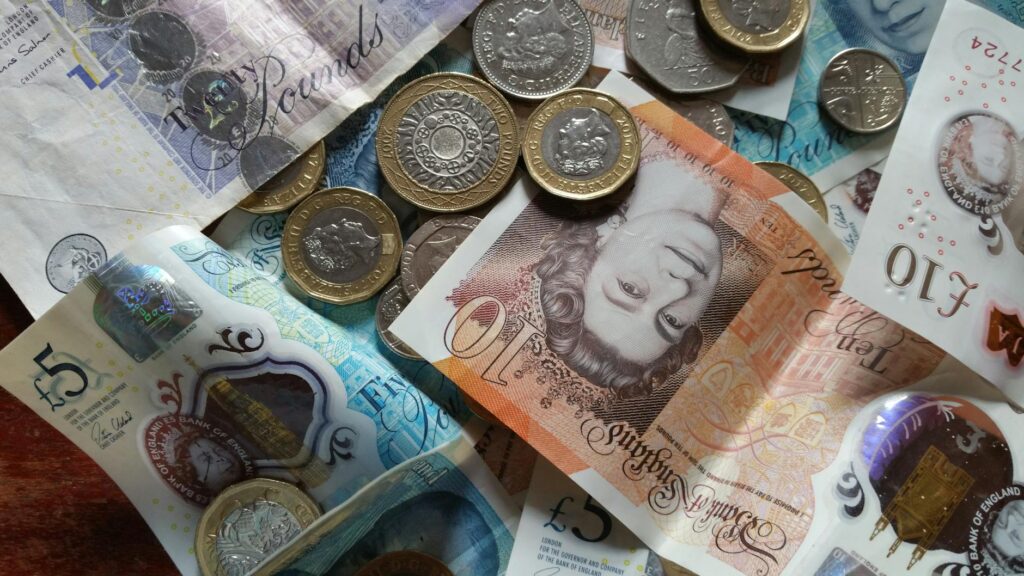
What your monthly payslip will actually look like
The easiest way to think about this is to ignore the balance entirely and work from your gross salary. The table below shows what you would pay each month on a Plan 2 loan at various salary bands for the 2026 to 2027 tax year.
| Gross annual salary | Monthly Plan 2 repayment | Rough annual total |
|---|---|---|
| £25,000 | £0 | £0 |
| £30,000 | £4 | £55 |
| £35,000 | £42 | £505 |
| £40,000 | £79 | £955 |
| £45,000 | £117 | £1,405 |
| £50,000 | £154 | £1,855 |
| £60,000 | £229 | £2,755 |
Those numbers do not change if the interest rate shifts in September. They only change if your salary changes or the threshold moves. The government reviews the threshold each tax year in April.
When overpaying Plan 2 makes sense
Most Plan 2 borrowers should not voluntarily overpay. If your loan is on course to be written off after 30 years, every extra pound you pay early is a pound you did not need to pay at all. The Money and Pensions Service and the IFS both make this point repeatedly: Plan 2 behaves more like a graduate tax than a conventional debt.
There are a small number of cases where overpayment does stack up. If you are confident you will earn above £60,000 consistently, you are likely to clear the loan before the 30-year deadline anyway, and the interest does start to cost you real money. In that scenario, overpaying on the loan works out similarly to overpaying on a low-rate mortgage, and you can model the decision against other uses of the same cash.
For everyone else, the better use of spare money is building an emergency fund, paying down any credit card or buy-now-pay-later debt at a real interest rate, or getting your pension match from your employer. We have a breakdown of where to park spare cash as a graduate that covers this in detail.

Checking your statement and fixing the common mistakes
The Student Loans Company sends an annual statement every April. You can log in to your account at any time through the student-loan-repayment portal on gov.uk. A few things to check at least once a year:
- Your repayment plan code is right. If you are on Plan 2 but your employer has you down as Plan 1, you could be repaying at the wrong threshold. Payroll fixes this from the next pay run.
- HMRC has reconciled the year. PAYE deductions do not reach your loan balance in real time. There is usually a lag of several months before repayments show up online.
- You are not still being deducted after the loan is paid. Once your balance is close to zero, switch to Direct Debit repayments for the final year so HMRC stops taking the full 9 percent every month.
If any of those look wrong, the Student Loans Company has a contact line on the back of your statement. Fix it in writing so you have a trail.
Plan 2 versus Plan 5: why the year you started matters
Anyone who started an undergraduate course from 1 September 2023 onwards is on Plan 5, not Plan 2. If that is you, a lot of the detail above does not apply, and skimming a Plan 2 article can leave you worse off.
The headline differences come down to a few numbers. Plan 5 drops the in-study interest premium and charges RPI only while you are studying, rather than RPI plus 3 percent. Plan 5 keeps the same 9 percent repayment rate above its threshold. The threshold is frozen at £25,000 until at least 2026 to 2027, substantially lower than Plan 2's £29,385. And the Plan 5 write-off window is 40 years from first April you are due to repay, not 30.
The practical upshot is that Plan 5 graduates on mid-range salaries will repay more in lifetime terms than Plan 2 graduates on the same income, even if the interest rate looks friendlier on paper. If you are not sure which plan you are on, you can check by logging into your Student Loans Company account. The plan code is shown on the front page under your personal details.
If you hold both a Plan 2 and a Plan 5 loan because you did a second degree after 2023, HMRC applies the lower threshold across both. That is not a mistake on your payslip, it is how the combined-plan rules are written.
Planning around the 2026 reset
If you are still at university or in your first year after graduating, the September reset is mostly a balance-sheet event and does not hit your cash flow. If you are a higher earner or close to paying off the loan, it is worth modelling the new rate in a simple spreadsheet against your overpayment options. Otherwise, treat it the way most Plan 2 graduates should: a number on a statement that matters less than your salary, your threshold, and the 30-year clock.
For the numbers behind each reset, the Student Loans Company publishes the new rates on gov.uk in mid-August each year. If you want to stay on top of the Plan 2 figures without reading the circulars, our maintenance-loan calculator is updated each tax year, and the student finance hub covers the rest of the system alongside side-income options like side hustles for students.
Frequently asked questions
Is the Plan 2 interest rate really 6 percent in 2026?
Yes. For the year from 1 September 2026, RPI is 4.1 percent, so the in-study RPI plus 3 formula comes to 7.1 percent but is capped at 6 percent. The post-study variable rate runs from 4.1 percent up to that 6 percent cap depending on your salary. These figures are published by gov.uk and set by the Student Loans Company.
When does the next Plan 2 interest rate change?
The Student Loans Company reviews the Plan 2 rate each September using the previous March RPI figure. The new rate takes effect from 1 September and applies for twelve months.
Does the interest rate affect my monthly repayment?
No. Your monthly Plan 2 repayment is 9 percent of everything you earn above £29,385. The interest rate changes the balance shown on your account. It does not change the amount HMRC deducts from your payslip.
Should I overpay my Plan 2 loan because of the interest rate?
For most graduates, no. Plan 2 loans are written off 30 years after the April you were first due to repay. Unless you expect to earn above around £60,000 consistently and clear the balance well before that date, overpaying typically costs more than doing nothing.
What happens if I move abroad?
You still repay Plan 2 if you live overseas. Repayments are not taken through PAYE. You complete an overseas income form each year and the Student Loans Company bills you directly, with thresholds adjusted for country-specific cost of living.
The stuff that shifts once term is properly underway
It is aimed at right now, once the timetable settles and the money gets trickier than freshers week let on. You get an email before people sign for a house in November, and another when the January-to-April loan gap starts to bite. Leave whenever you like.
Every signup also enters our draw for the Beats Studio Pro (£349, UK, 18+). Terms.
Reviewed · Editorial standards

Ask Jamie a question
If this guide didn't cover the thing you came for, ask. If enough people ask the same thing, it becomes a guide.