140 Applications Per Graduate Job: What Actually Works in 2026
By Priya Sharma · Updated 4 July 2026

The Institute of Student Employers' 2025 survey records a two-year high in application volumes: roughly 140 per graduate vacancy across its membership. That number is the practical context behind every "why have I not heard back" message in our inbox this year. Three things move the odds in 2026, and one of them is not the one you think.
Job-hunting after your degree?
Get our free Graduate Job Pack: the grad-scheme calendar by sector, a one-page CV that actually gets read, what to negotiate in an offer, and what Plan 5 repayments take from your first payslip. Twelve pages, checked for 2026/27.
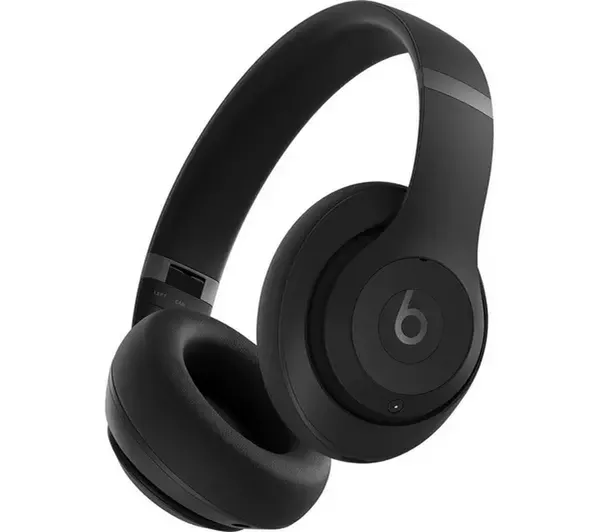
One email a week, unsubscribe whenever. Every signup goes into our draw for the Beats Studio Pro (£349, UK, 18+). Terms.
What the 140 actually means at the firm side
It is not 140 candidates serially considered. It is 140 applications a single recruiter or screening tool processes before the assessment centre invite is sent. The reader at the firm has minutes for each CV, sometimes seconds. The cohort being filtered is large enough that strong candidates routinely fall out at stage one for reasons that have nothing to do with whether they would do the job well. Decisions are made on signal that survives a thirty-second read.
This is not new behaviour but it is sharper in 2026 than in 2023. Both the application-volume rise and the contraction in graduate vacancies (see the data hub for figures) mean the funnel narrows faster. The right response is to think for what survives that filter, not for how to make every application "stronger" in general.

One. Specificity at the top of the CV
The single biggest change between a CV that converts in 2026 and one that does not is concrete output named in the first eight lines. Generic framing ("driven team player with strong analytical skills") is filler in a 140-applications-per-slot stream. Specific output ("built X dashboard at Y firm, owned reporting for Z product line, generated GBP A in tracked revenue") is signal.
This is not about over-claiming. It is about naming the actual work you did and the actual thing it produced. A reader screening 30 CVs an hour cannot do the cognitive work of inferring competence from soft framing. They can recognise output. Put your strongest concrete output in the line right after your name.
Two. Time-to-apply
Big Four windows open in September for the next summer's intake and the first window often closes within four to six weeks. Banks, large consultancies and many tech grad schemes follow the same shape. Rolling-deadline schemes (mid-tier consulting, government Fast Stream, many SMEs) reward early applications because the slots get filled as they read CVs, not at the end of the window. Late applications read the door as it closes.
Practical move: spend a Saturday this autumn building a single spreadsheet of every employer you intend to apply to with their open-and-close dates, decision dates, and the unique selection wrinkle each one has (some require a specific cover note, some have psychometric tests before CV review, some take video interviews first). Apply to your highest-priority employers in the first two weeks of their windows.
Three. The broadened target list
The math of the 140-to-one ratio is not flattering for an applicant whose list is six well-known firms. If your odds at each are roughly the same, six high-difficulty applications gives you a much worse expected outcome than twenty-five applications across firm sizes and sectors. The mid-tier specialist consulting market, growth-stage technology, mid-tier accountancy, graduate-friendly public sector (NAO, GLD, Civil Service Fast Stream, Bank of England), and policy think tanks are where the smaller, less-filtered employers sit.
You will hear from some of them. You will get faster feedback. You will collect concrete interview experience that strengthens the late-window applications you make to the most competitive employers in November. Broadening the list is one of the few levers an applicant fully controls.

What does not move the odds as much as you think
Three things candidates spend time on in 2026 that do not move the odds proportionally to the time invested:
- Polishing the cover letter to perfection. The screening reader's first decision is made from the CV. The cover letter matters at later stages and for the few employers who actively weight it. Spend cover-letter time on the firms that explicitly assess on it.
- Generic networking outreach. LinkedIn cold messages to senior people at target firms rarely convert in 2026's volume regime. Targeted outreach to graduate scheme alumni who joined two to three years ago is more useful, because they can tell you the specific assessment-centre format and what gets people through it.
- Repeated applications to the same employer. If you applied this year and were rejected before assessment centre, a second application next year with a similar CV will return the same result. Time spent on a stronger placement (year-in-industry, internship at a different employer, project that produces measurable output) yields more than re-submitting.
What employers say works at the assessment centre
From the published feedback in the ISE 2025 survey and adjacent careers-research outlets: candidates who treat the assessment-centre case study as a real client problem (read the brief, ask clarifying questions early, present a structure not just a conclusion) consistently outperform candidates who optimise for confident-sounding answers. Recruiters notice the difference within ten minutes. Specific competence reads, even at a junior level.
Group exercises reward candidates who push the group toward a useful structure without dominating. Most assessment-centre failure modes at the group exercise are over-dominating, not under-contributing. If you are unsure, default to clarifying and structuring rather than asserting and concluding.

This week, if you are applying
- Rewrite the top eight lines of your CV around concrete output. Name what you built, owned, or shipped. Quantify where you can. Strip generic framing.
- Build your application calendar. One spreadsheet, every employer you intend to apply to, open-close dates, format quirks, decision timing. Spend an evening on it; it saves the autumn.
- Broaden the list to 25 to 40 employers across firm size and sector. Mid-tier consulting, mid-tier accountancy, specialist firms, growth-stage tech, public sector graduate routes.
- Run one mock assessment centre with a careers service. Most universities offer them. The thirty-minute simulation is the most useful single hour of assessment-centre prep.
The 140-to-one ratio is the market you are applying into. The route through it is specificity, timing, and breadth. Generic excellence is no longer enough. Specific competence, applied early, across a broader list, is what the data says works.
Where the figures come from
Application volume, vacancy decline, and the wider 2026 graduate market data are on our State of UK Graduate Jobs 2026 data hub. Every row is sourced to a primary release and re-verified quarterly.
From your degree to your first payslip
Some weeks a big scheme quietly moves its deadline and half the people who wanted in hear too late. Some weeks it is the maths on what a £32k offer really leaves after tax and Plan 5. That is the Tuesday email. One tap and it is gone.
Every signup also enters our draw for the Beats Studio Pro (£349, UK, 18+). Terms.
Reviewed · Editorial standards

Ask Priya a question
If this guide didn't cover the thing you came for, ask. If enough people ask the same thing, it becomes a guide.