Supermarket Discount Breakdown
By Ella Woodward · Updated 5 September 2026

The reality of student food spending
Feeding yourself at university is often the first time you have to manage a weekly grocery budget on your own. According to the ONS cost-of-living bulletin for higher-education students, 49% of students reported financial difficulties and 78% were concerned about how rising costs would affect their studies. Maintenance loans frequently fall short of covering rent, leaving very little for daily necessities.
When money is tight, your food budget is the most flexible expense in the column. You cannot easily renegotiate rent or utilities, but you can change where and how you shop. Understanding how to find the best deals is a vital skill for managing your student money. The shift from a fully stocked family kitchen to a shared student fridge requires a change in mindset, where every pound matters.

Comparing the cheapest UK supermarkets in 2026
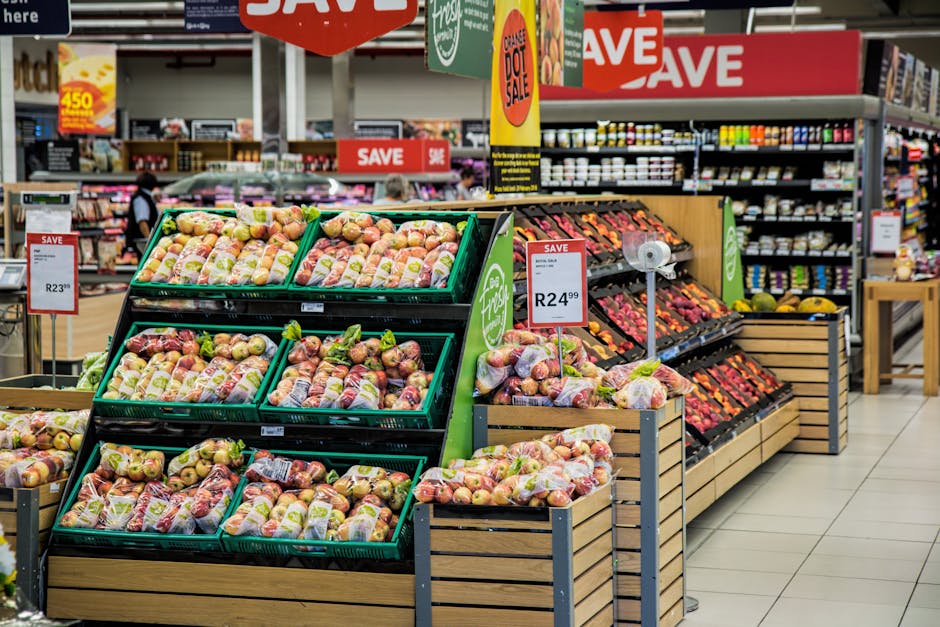
Knowing which supermarket has the cheapest baseline prices is your first defence against overspending. The consumer champion Which? tracks the cost of a standard basket across major retailers each month.
According to the Which. August 2026 basket comparison, Aldi was again the cheapest UK supermarket, and their 92-item basket cost £159.36 against £223.75 at Waitrose, a £64.39 gap on the same items.
See also: our full supermarket price comparison.
| Supermarket | 92-item basket (August 2026) | Loyalty card needed? |
|---|---|---|
| Aldi | £159.36 | No |
| Lidl (with Lidl Plus) | £161.10 | Lidl Plus app |
| Asda | £185.21 | No |
| Sainsbury's (with Nectar) | £185.55 | Yes (Nectar) |
| Tesco (with Clubcard) | £189.45 | Yes (Clubcard) |
| Morrisons | £194.11 | No |
| Ocado | £207.62 | No |
| Waitrose | £223.75 | No |
Worked example: if a 92-item basket at Aldi costs £159.36 and the same basket at Waitrose costs £223.75, the difference is £64.39. Over a 30-week academic year, doing a proportional weekly shop at Aldi instead of Waitrose saves you roughly £21.46 a week. Multiply by 30 weeks and you save £643.80 simply by switching where you shop. You can model this against the rest of your spending in our student budget calculator.
Discount retailers like Aldi and Lidl keep prices low by stocking a smaller range and focusing on own-brand items; you will not find every brand name you are used to; the quality of the own-brand alternatives is often identical to more expensive labels.
Maximising supermarket loyalty cards and student apps
If you do not live near a discount retailer, loyalty schemes are how you keep costs down. Tesco and Sainsbury's now lock their best prices behind Clubcard and Nectar. Walking into either store without scanning a card means paying an artificially inflated baseline price.
Convenience stores like Tesco Express or Sainsbury's Local often charge up to 20% more for the exact same items found in their larger superstores.
To get the most out of these schemes:
- Download the supermarket apps so you never forget your card at the checkout.
- Opt into digital receipts to track what you actually spend each week.
- Check the apps weekly for personalised bonus point offers based on your usual purchases.
- Save accumulated points for higher-value rewards like railcards, cinema tickets or restaurant vouchers (Tesco Clubcard's reward partners triple the points value).
- Use Asda Rewards if Asda is your nearest superstore. It builds a cashpot you can spend directly in-store rather than collecting points.
For grocery-specific student discounts, the only major supermarket offering a flat percentage off is Co-op. Their 10% student discount applies in-store with a valid TOTUM card at the till, across more than 2,600 stores. Student Beans and UNiDAYS are free to join with a UK university email and aggregate most of the other food and household codes worth claiming. Keep an eye on our discounts and deals hub for ongoing offers.
Timing your shop for the best reductions
Every supermarket reduces items approaching their use-by date. These yellow sticker items can take a serious chunk off your weekly bill if you turn up at the right time.
Always check the price per 100g on the shelf label to compare different package sizes and brands accurately.

Reduction times vary store by store. But the general pattern at large UK supermarkets:
- Mid-morning: first round of small markdowns on items expiring that day, often 10% to 25% off.
- Mid-afternoon: a second round around 2pm to 3pm, taking a slightly larger percentage off.
- Early evening: the deepest cuts between 6pm and 8pm as stores clear shelves before closing or restocking. Markdowns up to 75% are common on bakery, meat and fish.
Meat, fish and baked goods are the most reduced items. Most can go straight in the freezer when you get home, extending their useful life by months. Knowing the difference between a use-by date (a safety deadline) and a best-before date (a quality marker) means you can grab heavily discounted pantry staples that are safe for weeks past their best-before label.
Smart meal prep and bulk buying
Buying food in larger quantities almost always works out cheaper per gram than single portions. The strategy only works if you eat the food before it spoils, otherwise you have spent more money to throw food away.
A practical example: a 500g bag of pasta from a local convenience store costs around £0.90. £1.80 per kilogram. A 3kg bulk bag from a large supermarket costs £4.20, working out at £1.40 per kilogram. Split the bulk bag with three housemates and each of you pays £1.40 for a 1kg share rather than £1.80 from the corner shop. Apply the same logic to rice, oats, toilet roll and washing-up liquid across a term and a four-person house comfortably saves over £100.
You can link your university email to Student Beans and UNiDAYS to access exclusive grocery delivery codes and bulk-buy partner offers.
For fresh ingredients, bulk buying only makes sense if you batch cook. Cooking a large pot of chilli, Bolognese or curry uses up a whole pack of vegetables and a tray of meat at once. Portion the cooked meals into reusable containers and freeze them. This stops you from ordering expensive takeaways when you are too tired to cook after a long day. A decent set of microwave-safe containers is one of the better £15 you can spend in your first week. See our cheap meal planning guide for batch recipes under £1.50 per portion.
Online vs in-store
Both have a financial argument depending on your habits.
Shopping in-store lets you physically check use-by dates, hunt for yellow sticker reductions and avoid paying delivery fees. The downside is that supermarkets are designed to tempt you. End-of-aisle deals and checkout snacks turn a planned £30 shop into £42 without you noticing.
Shopping online removes most of that. You can build your basket over a few days, watch the running total, and remove items before checkout. Make it work on a student budget by coordinating a single large order with housemates. Splitting a £3 delivery fee four ways makes it negligible. Many supermarkets offer first-order codes worth £15 off £60+. Alone covers a few weeks of delivery for a shared house.
Sharing food costs with housemates
Living in shared accommodation is one of the most underused chances to cut grocery costs. When sorting student housing, talk to future flatmates about how you plan to handle household supplies before the first week.
Instead of five people buying five separate bottles of cooking oil, washing-up liquid and milk, set up a shared kitty for the basics. This cuts duplicate purchases and frees up space in cramped student kitchens. Use our bills splitter tool to track who has paid for the communal items so the kitty stays fair.
According to NUS research, a substantial share of students used food banks during the recent academic year, which is why splitting communal costs and cooking together once or twice a week matters beyond the maths. Cooking together is also cheaper per portion than cooking solo. Just establish clear boundaries about what is shared and what is personal property to head off arguments over stolen snacks.
Frequently asked questions
How can students get discounts on groceries?
Sign up for supermarket loyalty schemes like Tesco Clubcard, Sainsbury's Nectar and Asda Rewards to access member prices. For a flat student discount, the Co-op gives 10% off in-store with a valid TOTUM card. Switching primary shop to Aldi or Lidl is the biggest immediate saving and does not need a card.
What time do supermarkets reduce their food prices?
Most large supermarkets run their final round of yellow-sticker reductions between 6pm and 8pm. Smaller markdowns appear earlier in the day, typically mid-morning and mid-afternoon. Timing your shop for early evening gives you the best chance of heavily discounted meat, fish and bakery items.
Is it cheaper to shop online or in-store for food?
Shopping in-store lets you find yellow-sticker reductions and avoid delivery fees. Shopping online stops you from impulse buying. You can see your running total and remove items before checking out. For a shared house, online is usually cheaper once you split the £3 to £5 delivery fee between four people.
How much should a UK student spend on food per week?
A typical UK student spends £30 to £45 per week on groceries. Shopping at Aldi or Lidl, planning meals in advance and batch cooking dinners gets you to the lower end of that range. The average can vary significantly by location and dietary needs. The figure to track is your own actual spend on this week's receipts, not a national average.
The stuff that shifts once term is properly underway
It is aimed at right now, once the timetable settles and the money gets trickier than freshers week let on. You get an email before people sign for a house in November, and another when the January-to-April loan gap starts to bite. Leave whenever you like.
Every signup also enters our draw for the Beats Studio Pro (£349, UK, 18+). Terms.
Reviewed · Editorial standards

Ask Ella a question
If this guide didn't cover the thing you came for, ask. If enough people ask the same thing, it becomes a guide.