
Portfolio and Audition Courses
By Sophie Chen · Updated 19 October 2026

Sophie's pack for 2027 entry
The Applying to Uni pack is an 8-page PDF. It covers the 13 January UCAS deadline and what to do before it, the three personal statement questions, when to apply for student finance, and what the England loan comes to a month.
Leave it unticked and you'll just get the link to the PDF. The letters have no set schedule. You need to be 13 or over. Unsubscribe any time. Privacy policy
Application Deadlines
Identify your application system and deadlines
Students applying for creative degrees use two different UCAS systems depending on their chosen institution. If you want to study fine art, graphic design, architecture, or a standard university drama degree, you use the standard UCAS Undergraduate portal. Nine specialist music, dance and drama schools take applications through UCAS Conservatoires. Drama schools outside it use UCAS Undergraduate or their own application forms. You can apply through both systems simultaneously if you want to keep your options open. You must pay the application fee for both.
Deadlines vary significantly between the two systems; music courses at conservatoires have the earliest cut-off in the academic calendar; for 2027 entry, the UCAS Conservatoires deadline for music was 1 October 2026. Most undergraduate dance, drama and musical theatre courses at conservatoires match the standard UCAS equal consideration deadline, which falls on 13 January 2027.
Missing the UCAS Conservatoires music deadline means your application is no longer guaranteed consideration, though many courses stay open after it.
If you apply for an art or design degree through UCAS Undergraduate, you submit your initial application by the January deadline, and the university will then email you a link to a secure portal like SlideRoom or PebblePad to upload your portfolio. Do not wait for this email to start building your portfolio; you must have your work photographed and ready to upload before Christmas.
Keep a spreadsheet tracking every deadline for every school. Log the date your application goes in, the date your portfolio is due, and the dates of any scheduled auditions. Missing a secondary deadline for a self-tape submission can get you rejected, regardless of how strong your initial application was.
Budgeting for the fees
| Institution | Course Type | Typical Assessment Fee |
|---|---|---|
| Royal College of Music | Performance/Composition | £115 |
| LAMDA | Professional Acting | £15 (first round) |
| Guildford School of Acting | Musical Theatre | £15 (first round) + £30 (recall) |
| Emil Dale Academy | Musical Theatre | £45 (flat fee) |
Calculate your application and assessment costs
Creative degrees cost significantly more to apply for than standard academic subjects. You must pay the initial application fee, plus individual assessment fees at most conservatoires and drama schools you apply to.
Audition fees cover the cost of the panel’s time, venue hire, and administrative staff. These fees range from £15 for a first-round video submission to over £100 for an in-person audition. If a school uses a multi-stage audition process, you might pay a smaller fee for the first round and an additional fee if you get recalled to the campus.
You also need to budget for hidden costs. If you live in Scotland and apply to five drama schools in London, you must pay for train tickets, overnight accommodation, and food for each recall. You might also need to purchase sheet music, specific dancewear, or high-quality art supplies to finalise your portfolio.
Do not apply to ten schools just to increase your odds. This scattergun approach will exhaust your budget and your energy. Research the faculty, the alumni network, and the specific teaching style of each institution. Narrow your list to five schools that match your creative goals. Use our student budget calculator to work out exactly how much you can afford to spend on travel before booking your audition slots.
Curating your portfolio
Select and digitise your creative work
Your digital portfolio must make an immediate impact and communicate your artistic voice clearly.
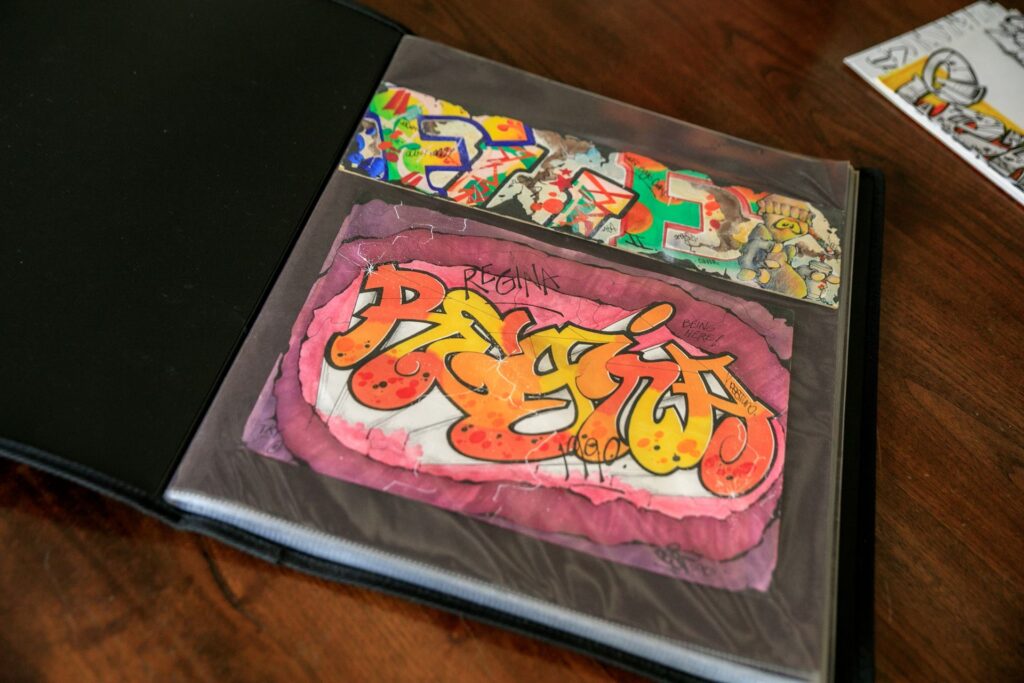
Most universities ask for 10 to 25 slides of work. Do not treat this as a chronological dump of everything you made during your A-Levels or Foundation Diploma. Select your strongest pieces that demonstrate a range of skills, materials, and concepts. Put your absolute best piece first to grab their attention and your second-best piece last to leave a lasting impression.
Always include pages from your sketchbooks to show how you develop ideas from initial concept to final execution.
Photograph your physical work in natural, indirect daylight. Ensure the camera lens is parallel to the artwork to avoid perspective distortion. Crop out any background clutter so the focus remains entirely on your art. Save your files as high-resolution JPEGs or PDFs. Check which format the university portal accepts and its maximum file size. Compressing your files too much will ruin the image quality. Use dedicated software to reduce the file size while maintaining clarity.
Label every file using a consistent naming convention. Include the title, medium, dimensions, and the date you created it in the file name or the provided caption box. If a piece was a collaborative effort, state your specific role in the project. Never pass off group work as entirely your own. If you apply for an animation or illustration course, include examples of observational life drawing. Tutors want to see that you understand human anatomy and proportion before they teach you how to stylise it.
If you secure an in-person interview, you will usually be asked to bring a physical portfolio. Buy a sturdy A3 or A1 portfolio case with clear plastic sleeves. Mount your work on neutral black or white card to make the colours stand out. Never present loose sheets of paper that can fall out or get damaged during transit.
Preparing your audition material
Record your self-tapes and learn your repertoire
Drama schools and conservatoires increasingly use self-tapes for their first-round auditions. This approach saves you money on travel but requires you to master basic filming and sound recording techniques.
For acting courses, you usually need two contrasting monologues. One is usually classical, such as works by Shakespeare or Marlowe. The other is contemporary, written after a cut-off year that each school sets. Choose characters close to your own age and natural casting bracket. Do not attempt a complex accent unless you can execute it flawlessly under pressure. Read the entire play, not just the monologue book. The panel will ask you about the character’s broader process during the interview stage.
Film your self-tapes against a plain, neutral background. A blank wall or a tightly pulled bedsheet works perfectly. Position the camera at eye level and frame yourself from the chest up. Ensure your face is evenly lit by standing facing a window or using a ring light. The panel needs to see your eyes clearly to assess your emotional connection to the text. Record in a room with soft furnishings to absorb echo. Poor audio will ruin a great performance.
Do not record your self-tapes first thing in the morning. Your voice needs time to wake up. Complete a full vocal and physical warm-up before you press record. Hydrate well. Treat the recording session like a live performance. Do several takes, review them critically, and only submit the version where you feel entirely connected to the material.
Music applicants must prepare specific repertoire outlined on the conservatoire’s website. You might need to perform three contrasting pieces from different historical periods. Memorise your music completely. Relying on sheet music creates a physical barrier between you and the panel. If your audition requires an accompanist, the conservatoire will usually provide one. You must bring clean, taped sheet music in the correct key for them to read. Practise sight-reading and aural tests daily in the months leading up to your audition, as these are often part of the assessment.
Securing Funding
Claim your fee waivers and travel bursaries
You do not have to abandon your application if you cannot afford the steep assessment fees. Conservatoires and drama schools actively want to recruit students from diverse socioeconomic backgrounds. They offer fee waivers and travel bursaries to help you cover the costs of applying.
If your total household income is £25,000 or less per year, every conservatoire will consider a complete audition fee waiver, and some set a higher limit. You must apply for this waiver after you submit your UCAS Conservatoires application and pay the UCAS fee, but before you pay the audition fee. If you pay the audition fee first, some schools will not refund it. You will need to provide evidence of your household income, such as a recent P60, a tax return, or a Universal Credit statement.
If you are still at a UK school or college and have had government-funded free school meals at any point in secondary education, you can qualify for an application fee waiver from UCAS Conservatoires.
Check the widening participation pages on each university’s website. Some drama schools partner with the Open Door project, which provides free auditions, travel expenses, and tutoring for acting applicants from households earning £43,000 or less. Its applications for 2027 entry closed on 7 September 2026. Some schools also offer travel bursaries towards your train fare if you meet their criteria and attend an in-person audition or interview. Keep all your booking confirmations and physical tickets.
Acing the interview
Attend your live assessment or panel interview
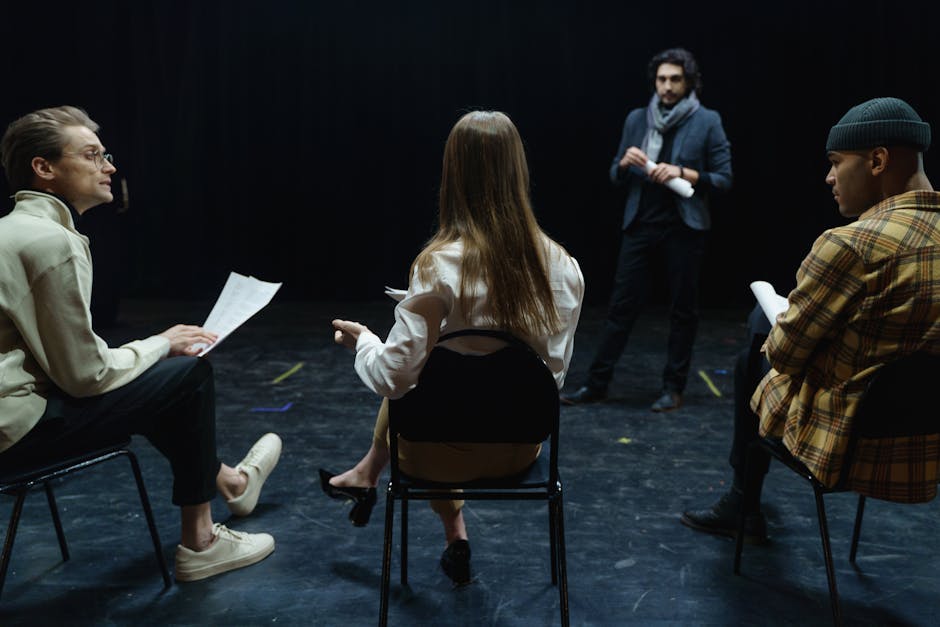
If you pass the initial digital portfolio review or self-tape round, the university will invite you for a live assessment. This is your chance to prove you are teachable, resilient, and can thrive in a collaborative creative environment.
Art and design applicants may face a 15 to 20 minute portfolio interview. The panel will ask you to talk through specific pieces of your work. They want to hear about your creative process, your influences, and how you overcome mistakes. Do not just describe what the artwork looks like. Explain why you made it, what materials you chose, and what you learned during the process. Be prepared to discuss contemporary artists or designers who inspire you. Saying you do not look at other artists' work makes you look arrogant, not original.
Drama auditions often take a full day. You will perform your prepared pieces, and the panel will also test how you respond to direction. They might ask you to perform your tragic monologue as if you are late for a bus, or ask you to play your classical piece at double speed. They are testing your flexibility and willingness to experiment. Do not get defensive. Take the note, process it, and try again immediately.
Many live auditions also include group workshops. You will participate in movement exercises, improvisation, or ensemble singing with other applicants. Wear neutral, unbranded black clothing that allows you to move freely. The panel watches these sessions closely. They are looking for students who support their peers, listen actively, and take creative risks. Trying to dominate the group or talk over other applicants will instantly ruin your chances.
At the end of the interview, the panel will ask if you have any questions for them. Always have two prepared. Ask about the contact hours, the specific facilities, or the industry connections the school offers. This shows you are seriously considering them as an option, rather than just begging for a place. Treat the interview as a two-way street. You are assessing whether the school is the right fit for your specific creative needs.
After your assessment, you may wait a few weeks for a decision. Use this time to research your potential new city. Our student housing section breaks down the best areas to live and explains how to secure a reliable guarantor for your rent.
If you want more advice on preparing for higher education, explore the rest of the guides on unisorted.co.uk.
Frequently asked questions
When do you apply for UCAS Conservatoires?
You should submit applications for music courses by 1 October of the year before you intend to start studying. For dance, drama, and musical theatre courses, the deadline usually matches the standard UCAS equal consideration date, which is 13 January for 2027 entry. Always check the specific date on the UCAS website for your specific entry year.
How much do drama school auditions cost?
The initial UCAS Conservatoires application fee is £34.50. Individual schools then charge their own assessment fees, which typically range from £15 for a video submission to over £100 for an in-person audition. You will need to pay these fees at most schools you apply to unless you qualify for a financial waiver.
How many pieces should be in an art portfolio?
Most universities request between 10 and 25 individual slides or pieces of work for an undergraduate application. This should include a mix of final, polished pieces and developmental work from your sketchbooks. Always prioritise the quality of your work over hitting the maximum number of permitted uploads.
Can you get a fee waiver for university auditions?
Yes. UK conservatoires will consider fee waivers for applicants whose household income is £25,000 or less per year. You must apply for these waivers directly through the school, before you pay its audition fee.
Sophie writes to people applying this year
Letters on applying to uni, starting it, and student finance. Miss the student finance deadline (usually in spring) and your first loan payment can land late.
You'll also get the Applying to Uni pack as a PDF. You need to be 13 or over. Unsubscribe any time. Privacy policy

Ask Sophie a question
If this guide didn't cover the thing you came for, ask. If enough people ask the same thing, it becomes a guide.
Read us often? You can add UniSorted as a preferred source on Google.