Graduate scheme assessments in 2026: the stages that actually decide it
By Priya Sharma · Updated 18 September 2026

Most people who miss out on a graduate scheme are never turned down by a person. They are cut by a form and a couple of online tests, before anyone at the company reads a word they wrote. The interview everyone worries about comes near the end. By then most of the field has already been sorted, each stage scoring something different that nobody explains to you.
It rarely feels like a system when it happens to you. An applicant to engineering and consulting schemes, posting on The Student Room as roo13 in 2024, described being cut before anyone had spoken to them: "I have received one rejection straight away without even an interview," they wrote, "despite the fact I have good grades... and tailored my CV and cover letter carefully." The machine had done its sorting. A person never came into it.
I went looking for what these assessments admit to, and the franker language sits on the employers' own pages, not the advice sites. EY calls its strengths assessment a "level playing field for all candidates", which is the polite way of saying it screens everyone for fit at the door, cheaply. Every stage before the interview is doing a version of that: thinning the pile so a recruiter only ever meets a shortlist.
Job-hunting after your degree?
Get our free Graduate Job Pack: the grad-scheme calendar by sector, a one-page CV that actually gets read, what to negotiate in an offer, and what Plan 5 repayments take from your first payslip. Twelve pages, checked for 2026/27.
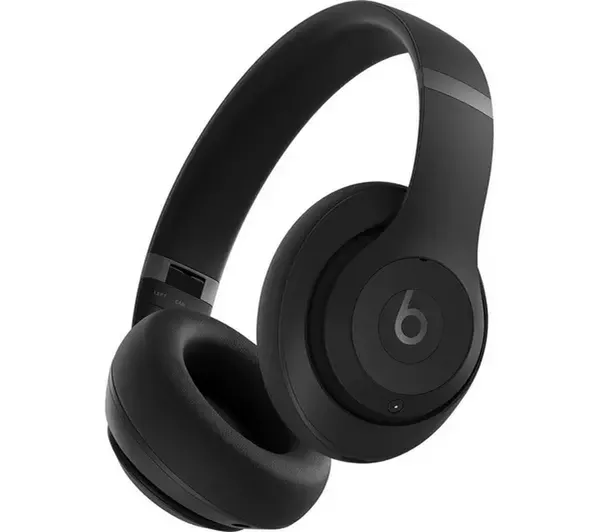
One email a week, unsubscribe whenever. Every signup goes into our draw for the Beats Studio Pro (£349, UK, 18+). Terms.
The order it comes at you, and why the deadline misleads
A large scheme in 2026 tends to run in one sequence: an application form, then online tests, then a recorded video interview, then an assessment centre. The tests usually fire the moment you submit the form, not near the closing date.
The advertised deadline is where a lot of people come unstuck. Serious employers recruit on a rolling basis. They start filling assessment-centre places months before the date on the advert, so by the closing week the good slots are gone even while the portal still shows the scheme as open. The Institute of Student Employers counts around 140 applications for every graduate vacancy. Graduate hiring is down about eight per cent this year, its weakest since the pandemic. The good employers work through that long queue in the order the applications arrive.

How the application form is marked
The free-text boxes on the application form are scored, usually against a fixed competency framework, and often before a human sees your name. "Describe a time you worked in a team to solve a problem" reads like an invitation to tell a story. What the box collects is evidence against a named competency, scored on whether the evidence is there.
The structure that scores is STAR: situation, task, action, result. Most people spend three sentences on the situation and one vague line on the result, when the marks live in the action. Give the situation and task a sentence each, then spend your words on what you personally did. A team answer with no "I" in it tells the marker nothing about you. Put a number on the result where one exists.
The same answer, written twice. Weak: "During second year I worked with a group on a marketing project. We had different ideas and it was hard, but we pulled together and it went well and we got a good grade." Scored: "Our four-person group stalled because two of us wanted opposite campaign angles. I suggested we test both on thirty students in the union over two days and let the numbers decide, then ran the survey and built the comparison. We shipped the winning angle and the module came back at seventy-eight." The second one names a decision, a method and a result. The marker can find the evidence without guessing.
Strengths questions are a different game
More large employers now run a strengths assessment alongside or instead of competency questions. A competency question asks what you did. A strengths question asks what energises you, and it reads your answer speed as much as the content, which is why EY frames it as checking for fit rather than ability.
You cannot bank three polished stories and deploy them here. A strengths session moves fast and asks a lot, and part of what it reads is whether your enthusiasm is real or performed. What helps is knowing the format is coming. Think beforehand about which parts of the work you like and which you only tolerate, before you are sitting there with the timer running.
What situational judgement tests are measuring
A situational judgement test gives you a workplace scenario and a set of responses, and asks you to judge them, usually by rating how effective each is or picking the most and least effective. There is rarely one right answer. SHL, one of the large assessment providers, describes its tests as scoring your "behavioural fit" against a competency framework, and you are usually ranked by percentile against a benchmark group rather than passed against a fixed mark.
The catch is that there is often a clever-looking answer that scores badly. The test is checking whether your instinct matches the behaviours the employer has said it wants, and raw cleverness barely comes into it. The scoring runs on reflex. The most useful thing you can do before you sit one is read the employer's values page, then answer as the person it describes. That is why two candidates with identical reasoning can score very differently on the same test.
The aptitude tests are the one part you can move
Numerical and verbal reasoning tests still sit early in most large schemes, and they are the most improvable stage, because they test a narrow set of skills that practice sharpens quickly: percentage change, ratios, reading a table against the clock. This is the one stage practice moves. Your score is ranked against the other applicants, most of whom practised beforehand. A few free practice runs only put you level with the people who read this kind of advice. The banks and consultancies that use them tend to reuse the same test types year to year. So last year's practice papers are a fair guide to what will come up.
The video interview nobody rehearses
Between the tests and the assessment centre, most large schemes now drop in a recorded, one-way video interview, the kind HireVue built its business on. It is you and a webcam. A question appears on screen, you get a few seconds to think, and a fixed time to record your answer to a camera with nobody on the other end. It rewards one specific, learnable thing: answering a competency question out loud, to time, without a person nodding you along. The ones who come off worst are rarely the weakest on paper. They are the people who never practised talking to a webcam. Under the clock they read stiffly off notes, or run out of time halfway through the example.

What matters less than the panic suggests
The CV matters less at this stage than the worry suggests, and I have written separately about where it moves the odds, in what actually works across 140 applications. Cover letters, for most big schemes, have folded into the form's text boxes. The hours you spend perfecting a separate document are usually taken from the online tests, and those are the stage that most often decides whether you go any further.
Where this leaves you
None of this is built around your merit. It is built around the employer's time: every stage exists to thin the field cheaply before a person has to spend an hour on you, and with roughly 140 applications chasing each place, that is arithmetic more than malice. Knowing which stage measures what is the nearest thing to an edge you can get honestly, because most of the people you are up against are still preparing only for the interview.
From your degree to your first payslip
Some weeks a big scheme quietly moves its deadline and half the people who wanted in hear too late. Some weeks it is the maths on what a £32k offer really leaves after tax and Plan 5. That is the Tuesday email. One tap and it is gone.
Every signup also enters our draw for the Beats Studio Pro (£349, UK, 18+). Terms.
Reviewed · Editorial standards

Ask Priya a question
If this guide didn't cover the thing you came for, ask. If enough people ask the same thing, it becomes a guide.