
Purpose Built Student Accommodation
By Tom Okafor · Updated 7 October 2026
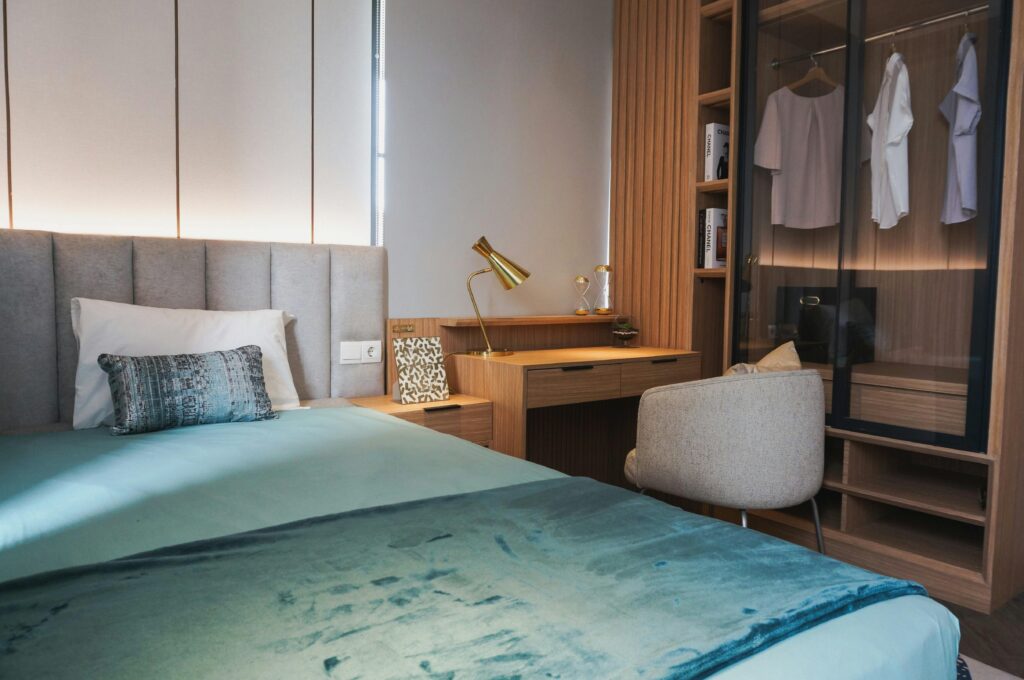
What is purpose built student accommodation?
Developers build purpose built student accommodation specifically to house hundreds of university students in large blocks of flats. You will often see the acronym PBSA used by universities, letting agents, and property developers.
The student housing market splits into three distinct categories. First, universities own and operate their own traditional halls of residence. They mostly reserve these buildings for first-year students to help them transition into university life. Second, universities hold nomination agreements with private providers. In this scenario, a private company owns the building, but the university reserves a set number of rooms for its own students.
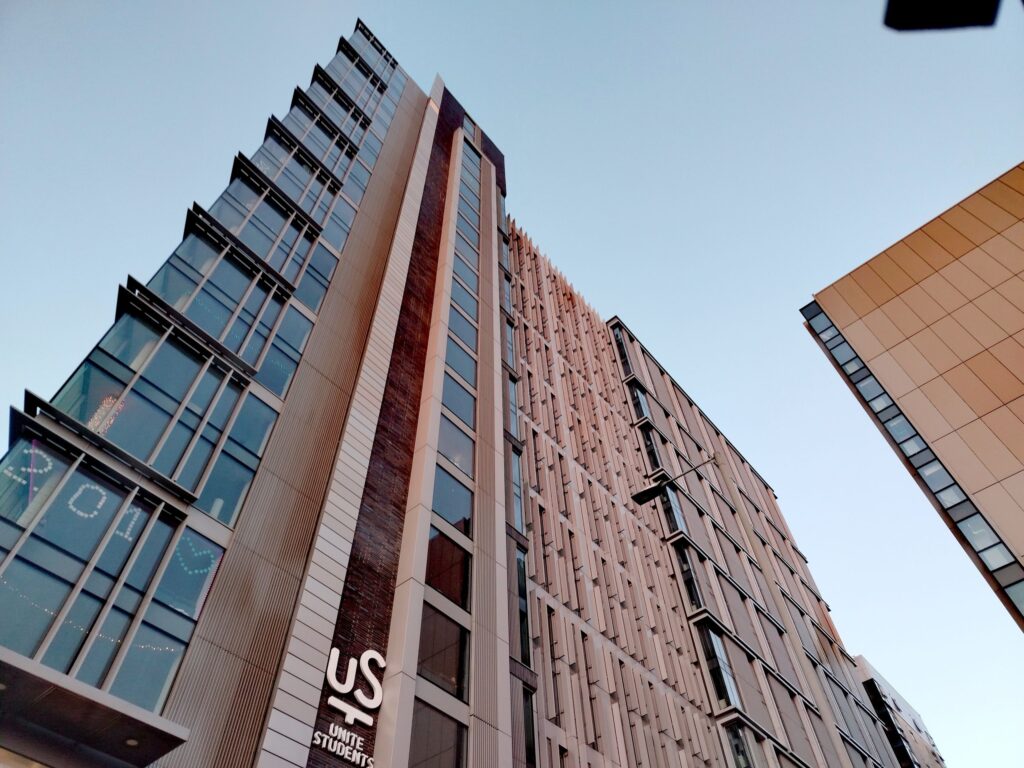
Third, you have private direct-let accommodation. Private companies own and manage these buildings, and they rent rooms directly to students in any year of study, from freshers to postgraduates. Major private operators include Unite Students, iQ Student Accommodation, and Student Roost.
These modern buildings differ significantly from traditional student houses, known as Houses in Multiple Occupation (HMOs). Private landlords convert standard residential houses into HMOs, squeezing extra bedrooms into former living rooms. In contrast, developers build PBSA blocks specifically for student living. They usually feature reception desks, communal study areas, and electronic key fob entry.
The true cost of private student halls in the UK
Private halls are often the most expensive way to live at university, although a private en-suite room now costs less than a university one in 31 of the UK markets Cushman & Wakefield tracks. Rents vary drastically depending on the city, the provider, and the room type. A standard en-suite room in a shared flat costs much less than a self-contained studio flat.
To understand the financial impact, take a private en-suite room at £255 per week, well above the average shown below. Over a typical 44-week contract, the total rent equals £11,220. A student from England on the maximum maintenance loan outside London gets £10,830 for 2026/27, so the loan does not even cover the rent. They face a shortfall of £390 before buying a single bag of pasta.
Your weekly rent typically covers all utility bills, including heating, electricity, water, and broadband. This provides financial certainty. You never need to worry about fluctuating winter energy prices or arguing with flatmates over who left the heating on all night.
However, you still need to budget for hidden costs. Most private halls use external laundry companies like Circuit Laundry or Washstation. Circuit’s published price at the University of Liverpool is £2.50 for a wash and £1.50 for a dry, so allow about £4 a load. You must also buy your own TV licence if you watch live television or BBC iPlayer in your private room, unless your home address has a licence and you only watch on a device that is not plugged into the mains. If you bring a car to university, ask about parking before you book, because only some blocks have it.
Pros and cons of private student accommodation versus HMOs
Deciding between a private hall and a traditional student house dictates your university experience and your bank balance. Private halls offer convenience, while HMOs offer independence and lower base rents.
| Feature | Private Student Halls (PBSA) | Traditional Student House (HMO) |
|---|---|---|
| Bills | All utilities and Wi-Fi included | Usually split and paid separately |
| Security | On-site team, CCTV, secure entry | Standard domestic door locks |
| Facilities | Gyms, cinemas, study rooms | Basic living room and kitchen |
| Maintenance | On-site team, with repair targets at National Code blocks | Depends on the private landlord |
| Cost | Premium pricing | Generally much cheaper |
Private halls suit students who want zero administrative hassle. You sign your contract, move in, and the building management handles everything else. If your shower breaks, you report it on an app, and the on-site maintenance team deals with it. Blocks signed up to the National Code work to targets of 24 hours for emergency repairs, five days for urgent ones, and 28 days for the rest. You also benefit from high security. Most buildings have CCTV, a secure entry system, and someone on call 24 hours a day.
HMOs require you to take on adult responsibilities. You must set up direct debits, negotiate with energy suppliers, and manage household disputes yourself. If your boiler breaks in a private rented house, you might wait days for a landlord to send a plumber.
However, HMOs offer a more authentic independent living experience. You get a proper living room, a garden, and the freedom to choose your exact housemates. In private halls, you often share a kitchen with five or six strangers. If your randomly assigned flatmates refuse to wash their dishes, the management team will rarely intervene, leaving you stuck in an unpleasant living situation for a year.
Use a rent affordability calculator to see if your maintenance loan covers the higher cost of private halls before you book.
Why purpose built student housing rents are rising
Student rents rose much faster than inflation between 2022/23 and 2024/25, and growth has slowed since. Cushman & Wakefield puts the average annual rent for a purpose built bed in the English regions at £8,779 for 2026/27, up from £6,734 in 2021/22. That figure covers every room type.
Several factors drove the increases. Developers face high construction costs, expensive borrowing rates, and strict new building safety regulations. To maintain their profit margins, developers pass these costs onto students. They achieve this by building expensive luxury studios rather than affordable standard rooms.
This creates a strange market dynamic. Nationally, the UK faces a severe shortage of affordable student beds. Locally, some cities have built too many expensive studios that students cannot afford.
If you study in cities like Nottingham, Leeds, or Sheffield, you have more bargaining power. Rents fell for 2026/27 by 4.1% in Nottingham, 2.2% in Leeds, and 3.7% in Sheffield, and Cushman & Wakefield’s 2025 report found empty rooms in all three. Operators with rooms to fill often offer incentives to secure your booking.
Never sign a tenancy agreement purely for a cashback offer if the weekly rent still exceeds your total student finance income.
How to secure the best student accommodation deals
Finding a good deal requires patience and market knowledge. Do not assume that the first price you see on an operator’s website is the final price.
See also: accommodation platforms compared.
First, look for group booking discounts. If you and three friends want to book an entire four-bedroom flat in a private block, operators sometimes offer a reward. In October 2026, Unite Students was giving groups of four or more a £250 retail voucher each. They prefer the certainty of filling a whole flat at once rather than finding four individual tenants.
Second, monitor the market in August. When the A-Level results are published, some students miss their university grades and cancel their accommodation contracts. Operators suddenly find themselves with empty rooms just weeks before the term starts. If you are a returning student with flexible living arrangements, you can sometimes find a discounted room during the Clearing period, though the average cut Cushman & Wakefield recorded in 2025 was under 1%.
Third, check what the provider includes in their incentive packages. Factor these perks into your budget calculations. A room costing £200 a week with a free gym membership might actually cost less overall than a £190 room where you must pay £40 a month for a separate gym.
When to book your university student accommodation
Booking timelines depend entirely on whether you want university-owned halls or private accommodation.
If you are a prospective first-year student, you apply for university halls through your university’s accommodation portal. This opens between November and April, depending on the university. Universities typically guarantee a room for first-year students who select them as their firm choice on UCAS and apply for accommodation before the university’s guarantee deadline. For 2026 entry, Birmingham set 30 June, Leeds 1 July, and Exeter 31 July.
Private operators open their bookings much earlier. For the academic year starting in September, private halls open their booking systems in October or November of the previous year. Returning students often panic and book rooms a full year in advance.
First-year students should wait until they receive their university offers before booking private accommodation, as private contracts are legally binding unless the provider’s cancellation policy covers missed grades.
Do not rush into signing a private contract in November just because the letting agent claims rooms are selling out. The cheapest standard en-suite rooms do sell quickly, but expensive studios often remain empty until September.
What to check during a student accommodation viewing
Never book a room based solely on the glossy photos on a provider’s website. You must visit the building in person. Operators often show you a pristine show flat rather than the exact room you will live in.
Ask the sales representative for the exact square footage of the room you are booking. Show flats often use smaller custom furniture to make the room look larger. Check the storage space. Lift the mattress to see if there is under-bed storage. Open the wardrobe doors to check the hanging space.
Test the mobile phone signal in the building. Large concrete accommodation blocks often block 4G and 5G signals, leaving you entirely reliant on the building’s Wi-Fi. Ask current residents about the Wi-Fi reliability, as an internet outage in a building of 500 students will ruin your ability to submit assignments on time.
Check the exact location of the building at night. A location might look great on Google Maps. You need to know if the walking route from the library is well-lit and safe after dark. Speak to second-year students about the local area, as they will tell you the truth about crime rates and noisy neighbours.
You must also ask about the guarantor requirements. Most private operators ask for a guarantor, and the rules differ. iQ and Student Roost accept guarantors based outside the UK, and Unite Students asks for someone over 25. If you fail to pay your rent, the operator will chase your guarantor for the money. If you are an international student or an estranged student without a UK guarantor, ask if the provider accepts alternative guarantor services like Housing Hand.
Frequently asked questions
Are bills included in purpose built student accommodation?
Yes, the large operators include utility bills in the weekly rent. This covers your electricity, heating, water, and broadband internet. You still need to pay for your own laundry usage and a TV licence if you watch live television or BBC iPlayer.
Do I have to pay council tax in private student halls?
Halls of residence, and homes where everyone is a full-time student, are exempt from council tax in England, Scotland, and Wales. If you receive a bill, send your local council a student certificate from your university. Northern Ireland has rates instead, which the landlord normally pays.
Can I leave my student accommodation contract early?
It depends on the provider. In England, a contract signed since 1 May 2026 with a provider in the National Code is usually a fixed-term tenancy, and you owe the rent for the whole term unless a replacement student takes the room. If you withdraw from your course, the code lets you end it with four weeks’ written notice. If the provider is not in the code, you probably have a rolling tenancy and can leave with two months’ notice.
What happens if I don’t get the grades for my firm choice university?
If you applied for university-owned halls, your room offer usually lapses if you miss your grades and lose your university place, though some universities, Nottingham among them, ask you to cancel it yourself by a set date. If you booked private accommodation, you must check their cancellation policy. Unite Students, iQ, and Student Roost all let first-year students cancel if they miss their grades, as long as the evidence arrives in time, which at Unite Students means within seven days of results being published.
Jamie writes to people already at uni
When your loan comes in, and what's due before it does. House deposits are the usual one.
You'll also get the At Uni pack as a PDF. Unsubscribe any time.

Ask Tom a question
If this guide didn't cover the thing you came for, ask. If enough people ask the same thing, it becomes a guide.
Read us often? You can add UniSorted as a preferred source on Google.