
Which UK universities use Turnitin's AI detector? I checked 30
By Alex Sheridan · 22 November 2026
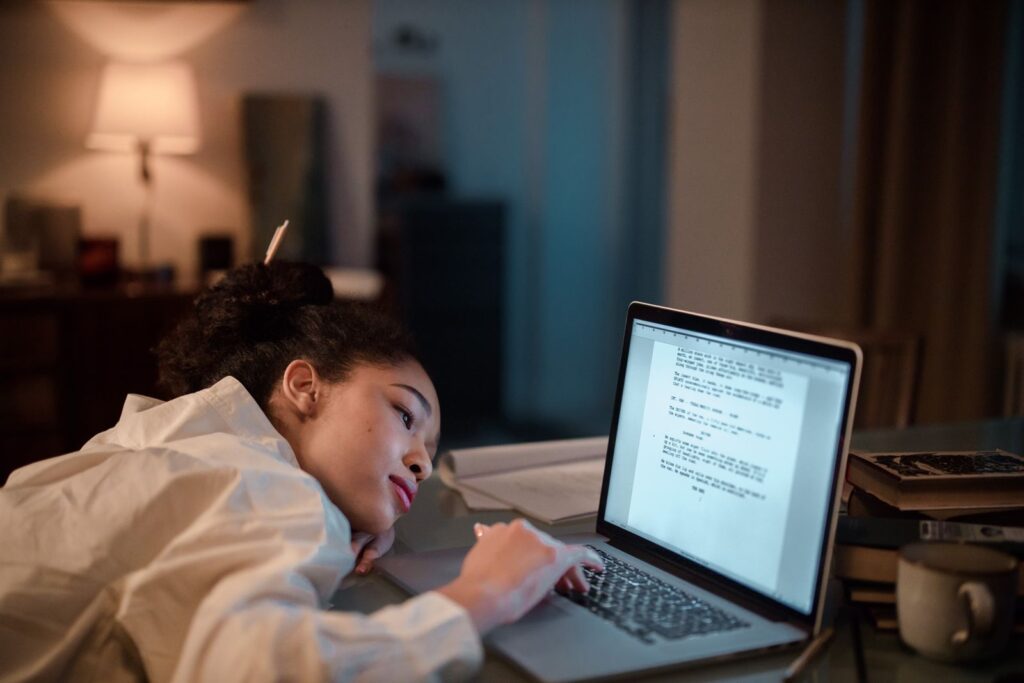
The Turnitin box you'll drop a January essay into looks the same at Bristol as it does at Durham. Bristol has Turnitin's AI writing detector switched on. Durham chose not to. You can't tell which kind of university you're at from your side of the upload, because Turnitin's own guide says the AI indicator and report "are not visible to students".
So I went and read each university's own pages for 30 of them this weekend: every Russell Group member, plus Aberystwyth, Bournemouth, Greenwich, Manchester Met, Nottingham Trent and the Open University. Only Bristol says the detector is on. Thirteen say it's off, or that they don't use AI detection tools at all. The other sixteen, Oxford and Cambridge among them, say nothing public about Turnitin's switch. "Not stated" was the most common answer, and I've left it in as one, rather than guess.
After freshers' week
The At-Uni pack is mostly about making the January loan payment last until April, and what to do if it doesn't.
Leave it unticked and you'll just get the PDF. The letters have no set schedule. You need to be 13 or over. Unsubscribe any time. Privacy policy
The count, university by university
Each university's name links to the page I read. The quote is that page's own wording, and the last column is the date the page gives itself, which matters more than you'd think (more on that below).
| University | Turnitin's AI detector | What its own page says | Date on the page |
|---|---|---|---|
| Aberystwyth | Off | "the university has decided to turn off the Turnitin AI Detection tool as of 30th September 2023." | 27 Sep 2023 |
| Birmingham | Off | "we have not currently enabled this feature." | Updated Jan 2025, review due Jul 2025 |
| Bournemouth | Off (opted out at launch) | A note on "the BU decision not to use" it | 13 Apr 2023 |
| Bristol | On | "has enabled Turnitin’s AI detection tool", with staff told to use it only when there's a concern | Undated |
| Cambridge | Not stated | Its Turnitin policy covers similarity checking only | Oct 2024 |
| Cardiff | Not stated | Nothing public found | n/a |
| Durham | Off | "No we don’t. We chose not to enable this feature" | 25 Sep 2024 |
| Edinburgh | Not stated | Staff guidance only: "Do not use AI detection tools". Turnitin isn't named | 24 Mar 2026 |
| Exeter | Not stated | Nothing public found | n/a |
| Glasgow | Off | "The University does not employ AI detection tools", after a 2023 memo recorded its decision "to opt out of Turnitin’s AI detection capabilities" | 2026 guidance (memo Apr 2023) |
| Greenwich | Off (opted out) | "we will not be implementing Turnitin’s AI detection tool" | 31 Mar 2023 |
| Imperial | Off | "Imperial does not use Turnitin's AI writing detection tool as part of its assessment processes." | Undated, written for 2026-27 |
| King's College London | Not stated | Older AI guidance pages have been taken down, and the live ones don't mention detection | n/a |
| Leeds | Not stated | A staff rule only: "Can I use AI-detection tools?" "No, not under any circumstance." Turnitin isn't named | Undated |
| Liverpool | Off since 1 Aug 2024 (piloted from Sep 2023) | "a decision has been taken to disable it going forwards" | Staff news, Jul 2024 |
| LSE | Not stated | Nothing public found | n/a |
| Manchester | Off (opted out) | "opt out of the first release of the detection tool" | 5 Apr 2023 |
| Manchester Met | Off | "The University chose not to enable the AI detector launched by Turnitin in 2023" | Undated |
| Newcastle | Off | "The University does not use the AI detection feature within Turnitin" | 26 Mar 2025 |
| Nottingham | Not stated | Nothing public found | n/a |
| Nottingham Trent | Not stated | Its Turnitin rules cover similarity reports only | Sep 2026 |
| Open University | Not stated | Nothing public found | n/a |
| Oxford | Not stated | Its student AI questions page doesn't mention detection | Sep 2026 |
| Queen Mary | Not stated | Its Turnitin page describes similarity checking only | Undated |
| Queen's Belfast | Not stated | Advice only: "the use of text-based AI detectors is not recommended." | 2025-26 |
| Sheffield | No detectors used | "GenAI detection tools are not used at the University of Sheffield" | Undated |
| Southampton | Not stated | Nothing on the detector. It "is moving away from Turnitin for 2026/27 academic year" | Undated |
| UCL | Off | "We do not use Turnitin’s AI writing detection" | 16 Nov 2026 |
| Warwick | Not stated | A student guide says Warwick is "beginning to use AI detection tools" and describes Turnitin's, without saying Warwick has it switched on | Jun 2025 |
| York | Not stated | Nothing public found | n/a |
Leeds and Edinburgh sit in the "not stated" pile on purpose. Both tell staff not to use AI detection tools, and Leeds gives reasons (data security, your essay becoming training data, inaccuracy) that read as aimed at outside websites. That's a pretty strong hint. It still isn't a line saying the Turnitin switch is off, so I didn't count either as one. King's is there for a different reason. Its older AI guidance pages have been taken down, and the live ones don't mention detection.
Two of the 30 are leaving Turnitin altogether. Newcastle "has decided not to renew its contract with Turnitin beyond the end of the 2026/27 academic year", over changes to Turnitin's licence terms and "the potential use of colleague and student data for AI purposes". Southampton's e-learning page says it "is moving away from Turnitin for 2026/27 academic year". That's a separate argument from the AI detector, though Imperial's page in the table comes from the same licence row.
What an "off" is worth
Look at the dates before you relax. Birmingham's page was due a review in July 2025 and hasn't had a visible one. Aberystwyth, Bournemouth, Greenwich and Manchester all opted out in 2023, when the detector was new, and I couldn't find a newer line from any of them on the switch. The nearest is Bournemouth's student news that August, which said Turnitin "has increased capabilities to detect AI use in submitted work" without saying the university had turned it on. Manchester's notice even said opting out "will not prevent us from enabling this function in the future", and Turnitin's guide is clear that the switch is each institution's: "admins have the option to enable/disable the AI writing feature from their admin settings page." UCL's is the only off page dated this academic year (16 November 2026). Imperial's carries no date but talks about 2026-27, so it's recent too.
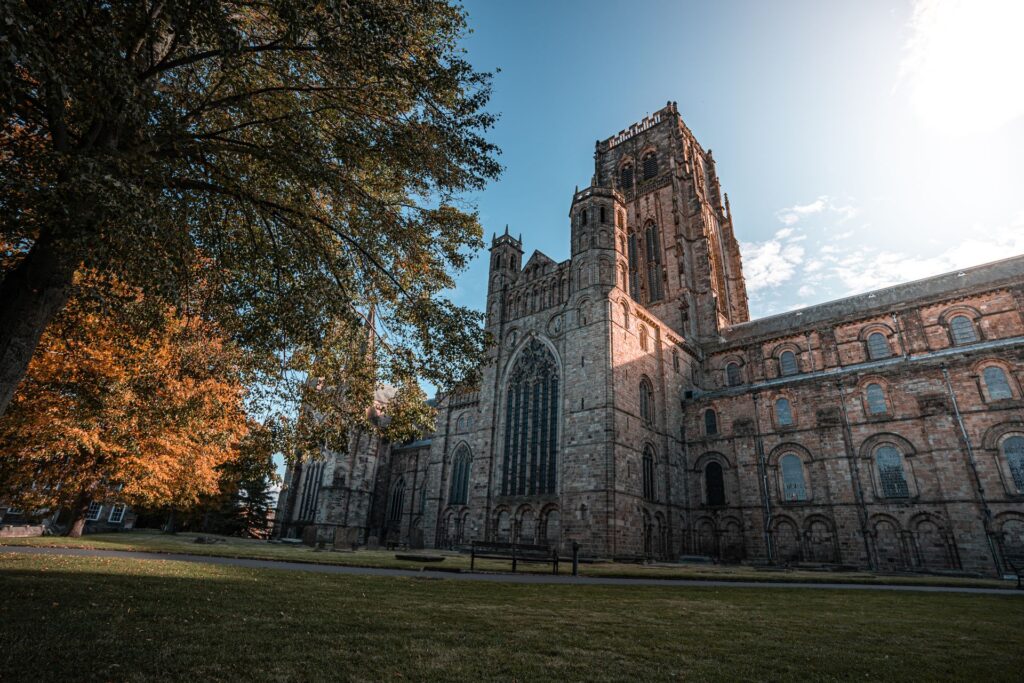
Durham's answer is the one I'd show anyone who thinks the off universities are being soft. It says "you can’t definitively match student work back to generative AI output", which is a fair summary of the whole problem (and a better reason than most universities give).
And the off universities haven't stopped looking. Newcastle's page goes on to say it "will only employ an AI detection tool as part of an academic misconduct investigation if required." A marker who thinks a paragraph doesn't sound like you can still raise it.
The one that has it on, and the one that turned it off
Bristol's page says the score is "only available to the instructor" and that staff should use the tool "only when concerns arise". Liverpool is the more striking story. It piloted the detector from September 2023, and a university guide from June 2024 says "Since the AI detector has been enabled, we’ve unfortunately seen a rise of students with disabilities being accused". That July, a staff news story said "a decision has been taken to disable it going forwards", and it came out of Turnitin from 1 August 2024. That's the nearest thing on this list to a university telling you what the detector did in practice.

If you're at Bristol, three things from Turnitin's own guides are worth knowing. It only looks at files with "at least 300 words of prose text in a long-form writing format", so a short reflection under that length won't get a score. A score from 1% to 19% shows as an asterisk with no percentage, because Turnitin treats those low scores as less reliable. And Turnitin says the score "should not be used as the sole basis for adverse actions against a student."
If your university is in the "not stated" column
Having Turnitin doesn't mean having the detector. Turnitin says AI writing detection "is only available to customers that license Turnitin Originality", so the similarity report you can see tells you nothing about the AI side. Several of the silent universities publish Turnitin pages that talk about similarity and stop there. Cambridge's policy, Nottingham Trent's rules and Queen Mary's guide all read that way.
The quickest honest answer is usually in your module handbook or the academic integrity page on your own VLE, which sits behind your login and which I couldn't read. If neither says, ask your module leader by email and keep the reply. I'd ask it plainly ("Is Turnitin's AI detection switched on for this module?"). It's a fair question for a student to put.
What I'd do before the January deadline
If your university is on the off list with a recent date, I wouldn't spend January worrying about a percentage. If its only word is a 2023 opt-out, I'd check the VLE or ask, and then stop worrying. Either way, I'd spend the month making sure I could show how the essay got written, because that's what protects you at any of the 30, on or off. Save drafts with version history on. Keep your notes, and the sources you opened. Which uses of AI your module allows is a separate question, and the three kinds of policy you'll meet are in our guide to AI and essays.
Don't paste your essay into a free online AI checker to see what it says. Leeds is blunt about why. Work submitted to those tools "becomes available as training data for other AI tools", and Manchester Met calls them "not reliable". You'd be handing your coursework to a site you know nothing about to get a number that means nothing to your marker.
And if you're ever accused, go to your students' union advice centre before you answer anything. They've seen these cases before, and they'll know how they run at your university.
While you're living on the loan
Jamie writes letters on student money, when there's something worth saying.
You'll also get the At-Uni pack as a PDF. You need to be 13 or over. Unsubscribe any time. Privacy policy
Ask Alex a question
If this guide didn't cover the thing you came for, ask. If enough people ask the same thing, it becomes a guide.
Read us often? You can add UniSorted as a preferred source on Google.