
AI and Essays: What UK Students Need to Know in 2026
By Alex Sheridan · Updated 27 September 2026

Most UK students are already using AI tools for their studies. The question is not whether to use them, but how to do it without falling foul of your university's academic integrity rules, damaging your own learning, or triggering a plagiarism investigation you did not deserve. This guide gives you the straight picture on policies, legitimate use, and where the real risks lie.
After freshers' week
The At Uni pack is mostly about making the January loan payment last until April, and what to do if it doesn't.
Leave the box empty and you'll just get the PDF. Unsubscribe any time.
How widespread is AI use among UK students?
According to a 2026 wellbeing report by Studiosity and YouGov, which surveyed more than 2,300 UK students across 160 universities, 71% of UK students now use AI for their studies, up from 64% the previous year. That is not a niche behaviour. It is the majority approach, and universities know it.
Our Exam Season Survival Guide 2026 covers timetabling, sleep, food, and managing panic across the full revision period.
The same report found that 75% of students who use AI report stress specifically from fear of being wrongly flagged by AI detection tools. That anxiety is not irrational: detection software has significant false-positive rates, and the consequences of a wrongful cheating accusation are serious. 52% of respondents cited fear of wrongful accusations as a top stressor. Understanding your university's actual policy, not its vague honour-code language, is the most protective thing you can do.
What do UK university AI policies actually say?
Policies vary considerably between institutions and even between departments within the same university. There are broadly three categories you will encounter:
Full prohibition: Some departments ban AI use entirely for assessed work, including essays, reports, and take-home exams. Using any AI-generated text and submitting it as your own is treated the same as plagiarism. These tend to be humanities and law departments where the quality of your writing is itself evidence of learning.
Permitted with disclosure: A growing number of universities allow AI as a research or drafting aid as long as you declare its use in a statement at the start of your submission. The key requirement is transparency: you write the analysis, you draw the conclusions, you cite the sources. AI might help you draft a paragraph you then substantially revise, but you declare that. Submitting undisclosed AI-generated text under a permitted-with-disclosure policy is still academic misconduct.
Tool-specific guidance: Some departments permit certain AI tools for specific tasks, for example using AI to check grammar, generate a basic literature-review summary, or create code comments, but ban it for core analytical writing. The line is often "AI for process, not for content."
Your safest move: read your department's specific module handbook, not the university-wide policy. If it is ambiguous, email your module coordinator and keep the reply. That email is your evidence if a detection flag ever lands on your work.
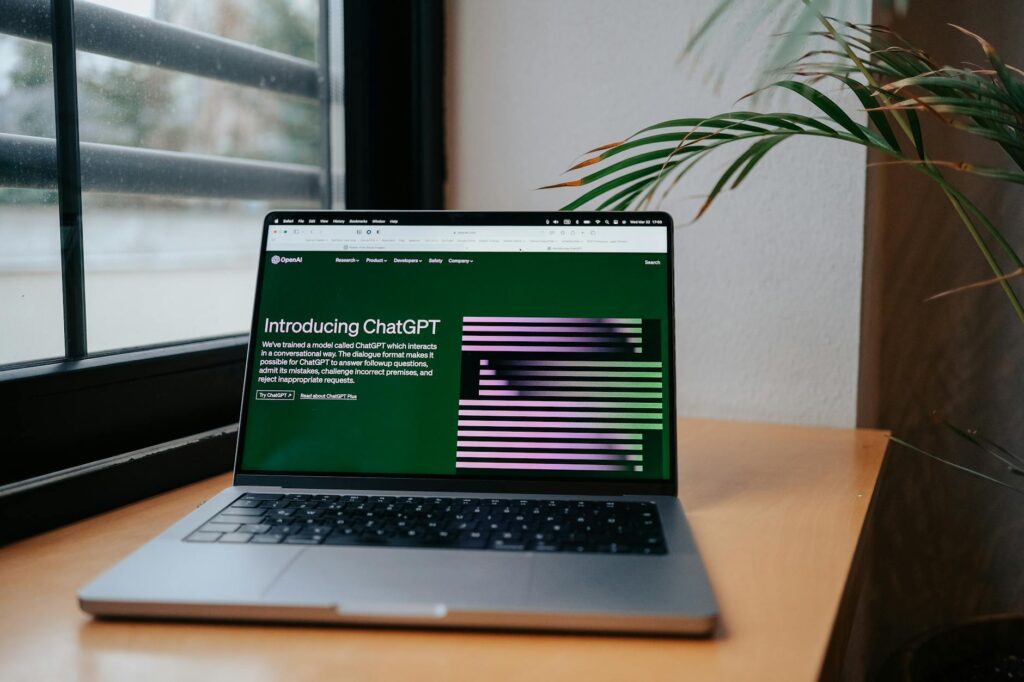
Where do students actually use AI, and where is it dangerous?
Based on the Studiosity/YouGov data and publicly available student accounts, the common uses break down like this:
| Use case | Risk level | Notes |
|---|---|---|
| Explaining a concept you are stuck on | Low | Similar to using a textbook or YouTube tutorial |
| Summarising a long reading | Low to medium | Fine for initial orientation; cite the original paper |
| Drafting essay structure / outline | Medium | Check policy; you still write the sections |
| Generating full essay paragraphs | High | Flagged by most detectors; misconduct under most policies |
| Paraphrasing your own draft with AI | High | Still triggers detectors and may breach policy |
| Code generation for computing assignments | Varies | Permitted in some CS modules, banned in others; check specifically |
| Grammar and style checking | Low | Generally allowed; equivalent to Grammarly |

The AI detector problem: false positives and what to do about them
AI detection tools like Turnitin's AI writing detection and GPTZero have significant error rates. Research published in peer-reviewed journals has found false-positive rates of up to 15% on human-written text, and notably higher rates for non-native English speakers writing in formal academic register. 81% of international students in the Studiosity/YouGov survey reported AI detector anxiety, compared with 74% of domestic students. The gap is telling.
If your work is flagged, universities generally follow an investigation process rather than immediate punishment. You can provide evidence of your drafting process: document versions, research notes, search histories, and your own annotations. Students who write in stages and keep records are in a much stronger position than those who produce polished drafts in one session with no digital trail.

What AI is actually doing to your degree
The concern raised by 43% of surveyed students, that AI over-reliance is eroding their critical thinking and communication skills, is not unfounded. The skills universities assess in written work are not arbitrary: the ability to construct an argument, synthesise sources, and express complex ideas clearly is what graduate employers are also assessing when they read your applications and CVs.
If AI writes your analysis, you practise the skill of prompting AI, not the skill of analysing. That gap compounds: the student who drafts everything themselves enters the graduate job market with significantly stronger writing and reasoning skills than the one who outsourced the difficult bits. This is not moralising about cheating. It is a practical observation about what you are paying for.
Using AI to understand material faster, to get unstuck on a concept, to check your work, or to improve your phrasing is a different thing entirely. Those uses extend your capability without replacing it.
Practical guidelines for using AI safely during exam season
During revision and exam season specifically, the highest-risk window is take-home assessments and extended essays submitted after revision. Here is a practical approach:
Before you start: re-read the specific module's AI policy. If it is unclear, email the coordinator. Save that reply. Keep your document version history on (Google Docs, Office 365, or Overleaf all do this automatically). If you draft in stages, you have a timestamped paper trail.
When using AI: use it to explain things you do not understand, to suggest readings, or to check your grammar at the end. Do not ask it to write paragraphs you will submit. If you are tempted to paste in generated text, ask yourself whether you actually understand what it says. If not, that is the honest signal that you need to engage with the material rather than borrow language.
If you get flagged: request a meeting, bring your evidence, and be factual. False positives do happen. Universities that have followed due process rather than summary punishment have a much better record of resolving these cases correctly.
Frequently asked questions
Can my university see if I used ChatGPT?
Detection tools can flag text that statistically resembles AI output, but they cannot definitively prove AI was used. Their false-positive rate means a flag is an allegation, not a conviction. Universities are required to investigate before acting.
Is using AI to improve my grammar cheating?
For most universities, no. Grammar checking tools, including AI-based ones, are generally treated the same as spell-checkers. Check your specific module handbook, but this is rarely prohibited.
What happens if I am accused of AI misconduct?
You will receive a written notice and an opportunity to respond with evidence. If found responsible, penalties range from a mark deduction to module failure, with more serious consequences for repeat or deliberate cases. First-time flags for borderline cases often result in a formal warning rather than a mark penalty.
Can I use AI for my dissertation?
Dissertation AI policies vary by department and supervisor. Many allow AI for literature search and grammar, and prohibit it for analysis and conclusions. Confirm in writing with your supervisor before you start.
Will AI get better at not being detected?
Detection tools and AI generation are in a continuous arms race. Universities are increasingly moving assessment design toward in-person viva, oral exams, and process-based marking, precisely because they cannot rely on text detection alone. Investing in your own skills is the hedge that works regardless of how that race develops.
Jamie writes to people already at uni
When your loan comes in, and what's due before it does. House deposits are the usual one.
You'll also get the At Uni pack as a PDF. Unsubscribe any time.
Ask Alex a question
If this guide didn't cover the thing you came for, ask. If enough people ask the same thing, it becomes a guide.
Read us often? You can add UniSorted as a preferred source on Google.