Exam Season Survival Guide 2026
By Alex Sheridan · Updated 4 July 2026

Exam season is difficult, and anyone who tells you otherwise is either lying or has a photographic memory. This guide is not about magic revision techniques. It is about getting through the next few weeks without burning out, making avoidable mistakes, or falling apart in the exam hall. Practical, honest, and actually useful.

Already at uni?
Get our free At-Uni Pack: stretching the loan through the Jan-to-April gap, the hardship-fund route nobody mentions, signing a private let without losing your deposit, and getting council tax right. Twelve pages, checked for 2026/27.
One email a week, unsubscribe whenever. Every signup goes into our draw for the Beats Studio Pro (£349, UK, 18+). Terms.
Build a timetable you will actually follow
The biggest mistake students make is creating a revision timetable that assumes they will be productive for eight hours a day from day one. That plan lasts until about day three. Build something realistic instead.
Start by listing every exam, its date, and its rough weight in your final grade. Then work backwards. Figure out how many revision sessions you have between now and each exam. Allocate subject blocks based on difficulty and weighting, not alphabetical order or how much you like the subject. The topics that make you want to close the book are usually the ones that need the most time.
Keep sessions between 45 minutes and 90 minutes with a genuine break afterwards. Sitting at a desk for four hours while checking your phone every ten minutes is not revision. Short focused blocks with proper breaks consistently outperform marathon sessions that trail off into distraction by mid-afternoon.
Use our guide to revising for exams in the UK for a deeper breakdown of technique-specific approaches by subject type.
Sleep is not optional
Sleep is where your brain consolidates what you have learned. Cutting it short to squeeze in more revision is a deal where you lose both sides. You remember less because the consolidation did not happen, and you function worse the next day because you are tired.

Aim for a consistent wake time every day during exam period, including weekends. Going to bed at different times each night disrupts the sleep quality, not just the quantity. If you are struggling to wind down after an evening session, try stopping revision an hour before you want to sleep and doing something restful rather than scrolling on your phone.
Late-night cramming the evening before an exam is rarely worth it unless you are reviewing short checklists of facts you already mostly know. Trying to learn new material at midnight before a nine in the morning exam tends to go badly.
What to eat during exam season
This is not a nutrition lecture. The practical point is that eating erratically or relying on caffeine and sugary snacks through revision sessions tends to produce energy crashes at exactly the wrong moments. A reliable meal pattern is more useful than optimising what you eat.
If you are revising at home, try to keep breakfast and lunch roughly consistent. It removes one decision from a period when decision fatigue is already high. If your budget is tight during this period, our student survival guide has practical tips on eating well without spending much.
On exam day itself, eat something proper beforehand. Sitting a two-hour paper on an empty stomach is an entirely avoidable own goal. Even if nerves suppress your appetite, something small and easy to digest is better than nothing.
Taking breaks that actually work
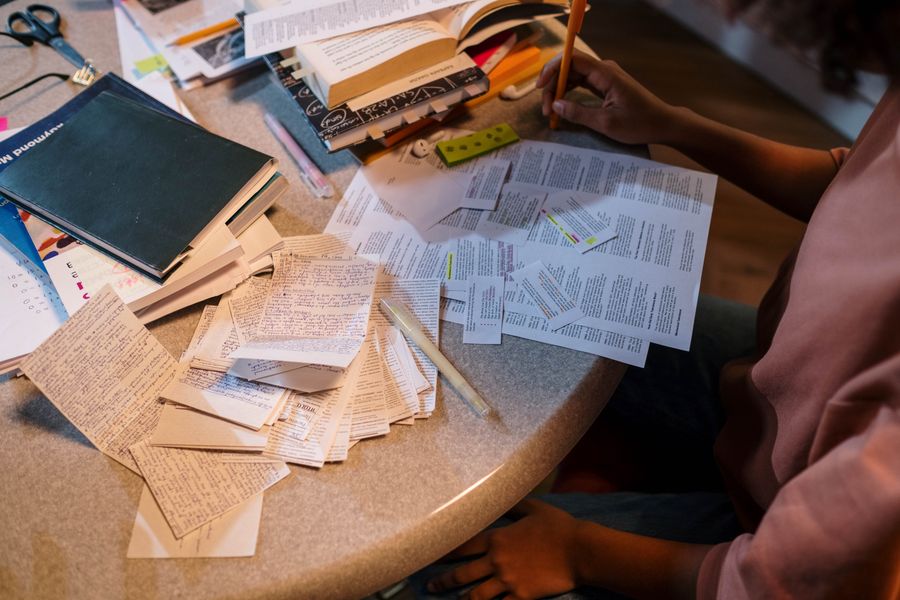
A break means something other than switching from your notes to social media. That is not rest, it is a different kind of stimulation that does not give your brain a chance to absorb what it just processed.
Useful breaks: a walk outside (even ten minutes changes your physical state noticeably), making and eating food, talking to someone about something that is not revision, lying down with your eyes closed, or doing something physical. Unhelpful breaks: watching a YouTube video that turns into an hour of related videos, getting into an argument on social media, or anxiously reading about the exam you are about to sit.
If you are revising in a group or library, plan your breaks with whoever you are working near. A group that takes breaks together tends to come back together, which beats trying to restart after everyone has wandered off on their own.
Dealing with exam panic and anxiety
Some pre-exam nerves are normal and even useful. A small amount of stress sharpens focus. The problem is when anxiety becomes disproportionate to the situation and starts affecting your ability to prepare or perform.
Signs that anxiety has crossed into a problem worth addressing: you are avoiding revision because starting it feels too frightening, you cannot sleep even when you are exhausted, or you are experiencing physical symptoms like nausea or a racing heart that do not settle down. These are common and your university will have support available. Most universities offer drop-in counselling sessions during exam periods specifically because demand is predictable.
The day before an exam, try to avoid talking to people who are visibly spiralling. Anxiety is contagious in group settings, and the person who turns up to the exam hall insisting they know nothing almost never means it literally. Find somewhere to be calm the evening before, even if that means leaving a group revision session early.
| Situation | What actually helps | What tends not to help |
|---|---|---|
| Pre-exam nerves | Controlled breathing, brief light exercise | Talking to people who are panicking |
| Revision block | Starting with the easiest topic, five-minute timer | Waiting until you feel ready |
| Poor sleep | Consistent wake time, stopping screens before bed | Late-night revision sessions |
| Low energy | Proper meal, short walk, genuine break | Caffeine on an empty stomach |
In the exam hall
Arrive with enough time that you are not rushing. Being late, or cutting it fine, adds unnecessary stress to a situation that already has plenty. Have your student ID, pens, and any permitted materials sorted the night before rather than the morning of.
Read the whole paper before starting. Knowing what is ahead lets you allocate time sensibly and start with questions you are confident about, which settles nerves. If you hit a question you cannot answer immediately, move on and come back rather than sitting on it while the clock runs.
In open-book or seen exams, the temptation is to copy from your notes. Examiners know this and mark accordingly. The marks are for analysis and argument, not for transcribing the material.
After the exam
Do not spend the afternoon of one exam doing a post-mortem with coursemates. The discussion is usually inaccurate and makes everyone feel worse. You cannot change what is already submitted. Either take a genuine rest day or move on to the next exam.
If you have multiple exams close together, prioritise recovery before the next round of revision. An hour of rest that allows proper sleep that night will likely outperform two hours of distracted cramming in the same slot.
For broader wellbeing strategies that apply beyond exam season, see our guide to healthy routines at university.
Exam season questions
How far in advance should I start revising?
Most students benefit from starting four to six weeks before their first exam. That gives enough time to cover the material properly without burning out before the exams start. Starting earlier is not always better if it means inconsistent effort across a long period. Starting later than three weeks out makes the process significantly more stressful.
What is the best revision technique?
Active recall consistently outperforms passive re-reading in the research on memory retention. That means testing yourself on material rather than reading through it again. Flashcards, practice questions, and explaining concepts out loud to yourself all fall under active recall. Spaced repetition, where you revisit material at increasing intervals, works well alongside this.
Is it worth pulling all-nighters before exams?
For almost all students in almost all situations, no. Sleep deprivation significantly impairs recall and cognitive function, which is what you need on exam day. A full night of sleep before an exam will almost always produce better results than an all-nighter followed by a foggy morning. The exception might be reviewing brief checklists of things you already know well, which does not require deep cognitive processing.
What should I do if I have exam anxiety?
Start with your university's wellbeing or counselling service. Most universities have increased capacity during exam periods. Your personal tutor or academic advisor can also flag if you need formal accommodations like extra time or a separate room. If anxiety is affecting your ability to prepare or function day-to-day, that is worth treating as a genuine problem rather than something to push through.
How do I revise when I have no motivation?
Start with the smallest possible action rather than waiting for motivation to arrive. Sit down, open the notes, set a five-minute timer, and begin. Motivation usually follows action rather than preceding it. Starting is the hardest part for most people. Working alongside others, even silently in the library, also helps with accountability.
The stuff that shifts once term is properly underway
It is aimed at right now, once the timetable settles and the money gets trickier than freshers week let on. You get an email before people sign for a house in November, and another when the January-to-April loan gap starts to bite. Leave whenever you like.
Every signup also enters our draw for the Beats Studio Pro (£349, UK, 18+). Terms.
Reviewed · Editorial standards

Ask Alex a question
If this guide didn't cover the thing you came for, ask. If enough people ask the same thing, it becomes a guide.